Prompt Caching Turns Agent Context Into Infrastructure

Earendil frames prompt caching as an agent systems primitive, where stable context becomes a cost, latency, and architecture concern.

Retrieval answer

Earendil frames prompt caching as an agent systems primitive, where stable context becomes a cost, latency, and architecture concern. Earendil's prompt caching piece is important because it treats cache as architecture. Agent systems often carry a large stable prefix: instructions, tool schemas, policies, project conventions, and sometimes retrieved context.

New Runtime synthesiseditorial-diagram
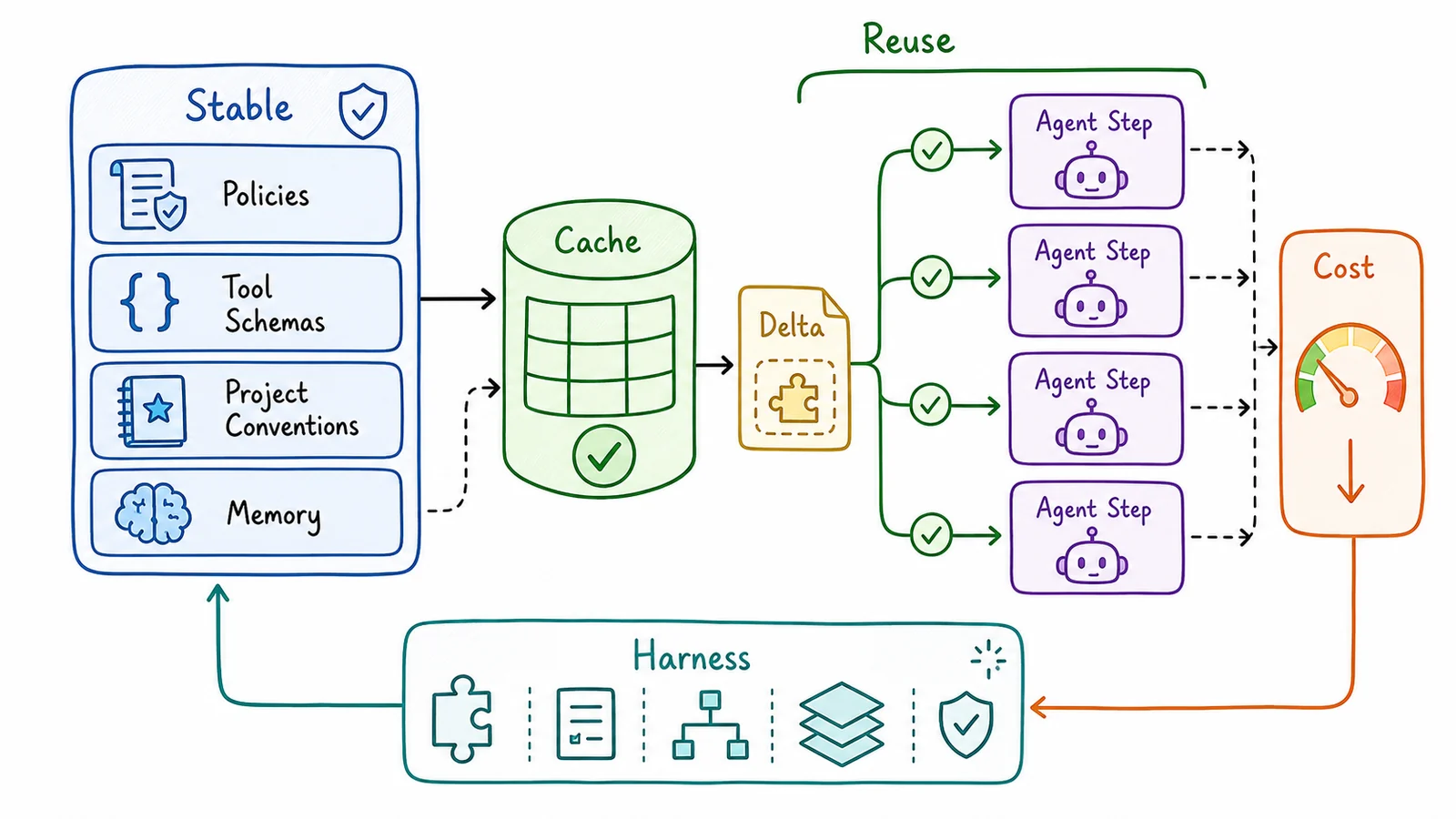
Hand-drawn cache architecture diagram separating stable context, task delta, reused agent steps, cost, and harness feedback.
Prompt caching rewards a cleaner harness: stable context becomes reusable infrastructure while each task sends only the delta.New Runtime synthesisOriginal source ↗

Earendil’s prompt caching piece is important because it treats cache as architecture. Agent systems often carry a large stable prefix: instructions, tool schemas, policies, project conventions, and sometimes retrieved context. If that prefix can be reused cheaply and predictably, context stops being only a prompt-writing problem and becomes an infrastructure layer.

That changes the economics of agent work. Instead of paying the full context cost on every step, the harness can separate stable context from the task delta. The agent still receives the necessary frame, but repeated work no longer has to re-send the whole frame as if every step were new.

It also creates pressure for cleaner harness design. Caching rewards stable, well-factored context. A messy prompt that changes constantly is harder to cache and harder to reason about. A disciplined harness can make cost, latency, and behavior more predictable at the same time.

What becomes infrastructure?

The source title, “Prompt Caching in Agents”, names the useful unit: repeated agent work often depends on a stable prefix plus a changing task delta. Caching makes that split operational, because the harness has to decide which context is durable enough to reuse.

For New Runtime, this belongs with the broader context-efficiency story: the future of agents is not bigger prompts everywhere. It is deciding which context is persistent infrastructure and which context belongs only to the current turn.

Source

Recommendation

Earendil frames prompt caching as an agent systems primitive, where stable context becomes a cost, latency, and architecture concern.

Discovery graph / next reads

Continue through New Runtime

Open the graph
  1. 01topicAI Infrastructure - New RuntimeExplore the ai infrastructure topic hub.
  2. 02topicCoding agents - New RuntimeExplore the coding agents topic hub.
  3. 03related materialClaude.md Shrinkage Says the Harness Is Learning What Not to SayShares ai infrastructure and coding agents.
  4. 04related materialCodex Hooks Close the Type Error LoopShares ai infrastructure and coding agents.
  5. 05related materialA Codex Skill Turns Multi-Agent Work Into a Reusable Control SurfaceShares ai infrastructure and coding agents.

These links are also published in this page’s JSON twin and as typed edges in DiscoveryGraph v1.

Who read this page?Machine requests, hidden until opened

Loading the privacy-safe route aggregate…

Open the JSON contract