Kimi K3 Is Moving From Model Launch to Routed Coding Component

Vercel and Factory show the next phase of Kimi K3 adoption: one open model becomes a routable, priced, regional, fast-or-standard component inside coding-agent platforms.

Retrieval answer

Vercel and Factory show the next phase of Kimi K3 adoption: one open model becomes a routable, priced, regional, fast-or-standard component inside coding-agent platforms. Kimi K3 already had the model-launch story, but the stronger signal is distribution. Across 5 public source links, the model shows up less as a standalone release and more as a routable coding component with provider.

New Runtime synthesiseditorial-diagram
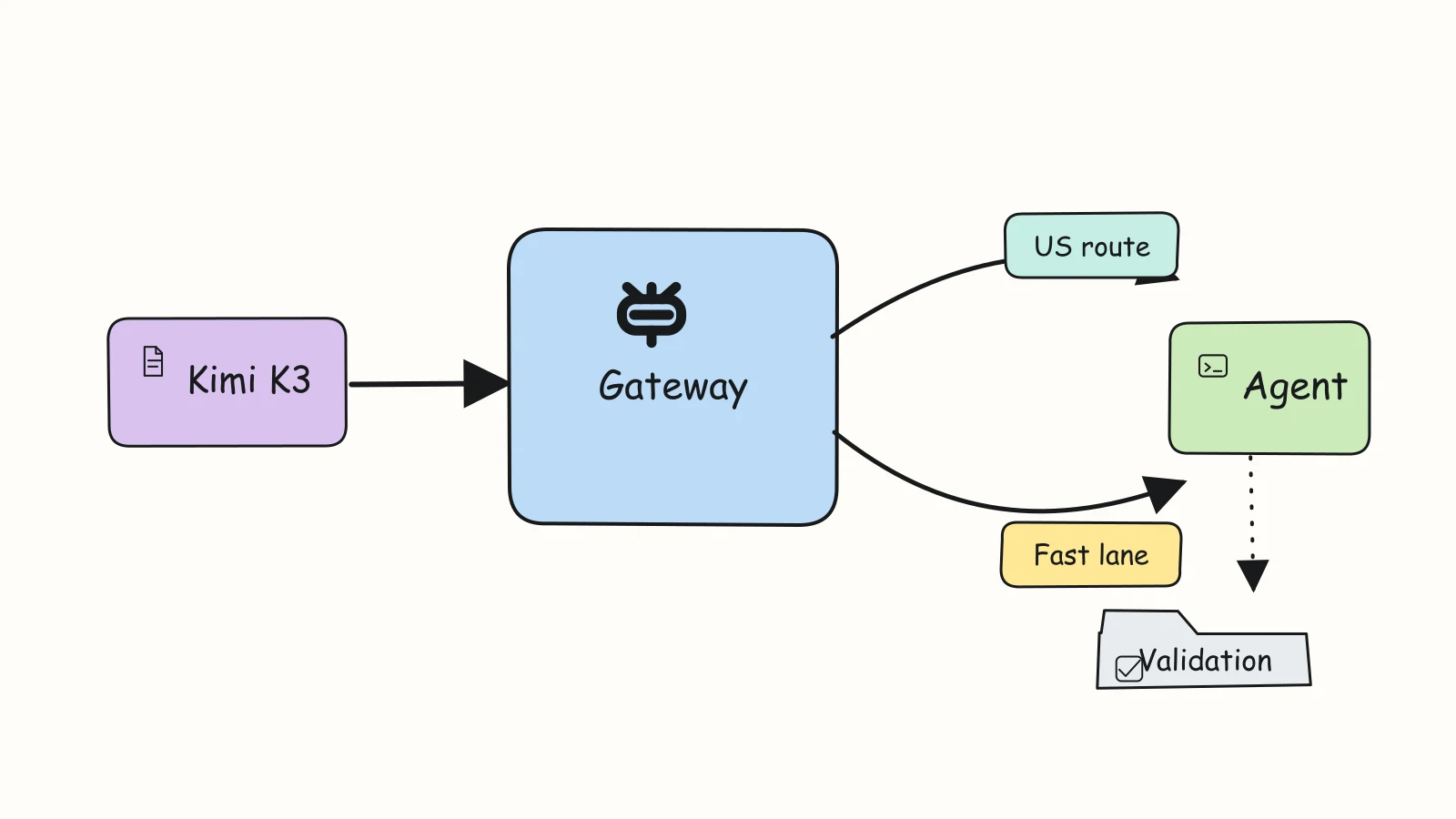
Hand-drawn routing map where Kimi K3 enters an AI gateway with US route and fast lane branches before becoming a coding agent component.
Kimi K3 becomes infrastructure when a gateway and coding-agent harness can route, constrain, and validate it.New Runtime synthesis from Vercel AI Gateway and Factory Droid public postsOriginal source ↗
  1. GatewayProvider routing, failover, data policy, throughput, and region turn a model into a managed route.
  2. Fast laneServing tiers become product controls rather than benchmark trivia.
  3. AgentCoding platforms consume the model as one replaceable role inside a larger workflow.

Kimi K3 already had the model-launch story, but the stronger signal is distribution. Across 5 public source links, the model shows up less as a standalone release and more as a routable coding component with provider choice, serving tier, data policy, and regional constraints.

Vercel says Kimi K3 and Kimi K3 Fast are now available on AI Gateway from US-based providers. The release adds Zero Data Retention support, provider routing, failover, higher aggregate throughput, a fast serving option, and an optional US inference region.

Factory is the second half of the signal. Its Droid posts frame Kimi K3 as a working model choice inside a coding-agent platform, with an initial discount and early tests on real coding-agent work.

Why does this matter?

The relevant object is no longer only the model checkpoint. It is the route:

  • the same model ID can hide provider selection and fallback;
  • a team can choose data-retention and region constraints;
  • speed becomes an explicit platform option;
  • a coding-agent platform can treat the model as one interchangeable role in a larger workflow.

That is how an open model moves from launch excitement to infrastructure.

New Runtime Read

Kimi K3 is becoming a routable component. That is more important than another benchmark argument.

Agent teams care about the full operating path: model, provider, latency, region, data policy, tool harness, repository context, validation, and cost. Vercel and Factory are both packaging Kimi K3 into that path.

This strengthens the pattern that the coding harness is becoming independent from the model. The durable product layer is the gateway plus workflow. Models compete inside it.

Recommendation

Vercel and Factory show the next phase of Kimi K3 adoption: one open model becomes a routable, priced, regional, fast-or-standard component inside coding-agent platforms.

Discovery graph / next reads

Continue through New Runtime

Open the graph
  1. 01topicCoding agents - New RuntimeExplore the coding agents topic hub.
  2. 02topicModel routing - New RuntimeExplore the model routing topic hub.
  3. 03related materialThe Coding Harness Is Becoming Independent From the ModelShares coding agents and model routing.
  4. 04related materialKimi K3: Frontend Is Becoming the Model Race ArenaShares coding agents and open models.
  5. 05related materialA Software Factory Connects Agents Through Verified OutcomesShares coding agents.

These links are also published in this page’s JSON twin and as typed edges in DiscoveryGraph v1.

Who read this page?Machine requests, hidden until opened

Loading the privacy-safe route aggregate…

Open the JSON contract