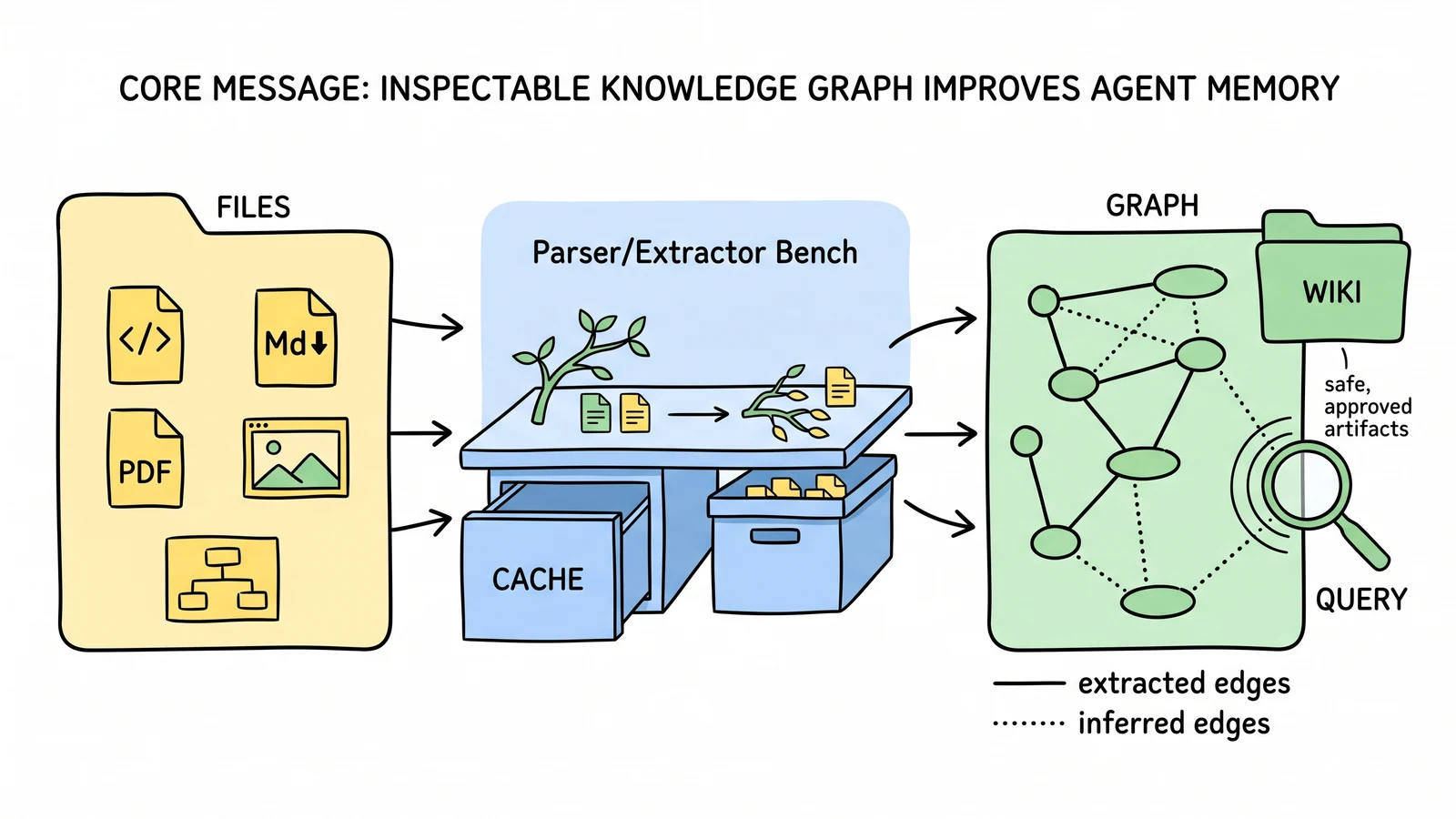
Graphify is interesting because it does not start by hiding project knowledge inside an opaque vector store. The repository describes a local graph layer over code, Markdown, PDFs, screenshots, images, and diagrams, with outputs that can be inspected as graph, wiki, JSON, or cache artifacts.
That shape is useful for coding agents. Tree-sitter and document extraction can preserve relationships the agent should be able to audit: which symbol points where, which note supports which claim, which edges are extracted, and which are inferred.
Embeddings can still be useful, but they should not be the only memory surface. If an agent is going to act on a repository, it helps when the memory layer can explain why two files, claims, or concepts are connected.
For New Runtime, Graphify fits the analytical-memory loop: keep source artifacts, expose relationships, mark uncertainty, and let future runs update the graph instead of re-reading everything from zero.