Mem0 Dream Adds Background Compaction To Agent Memory

Mem0 Dream introduces background merge, supersede, and synthesis operations so long-running agent memory can preserve history without polluting retrieval.

Retrieval answer

Dream is a background maintenance lane for Mem0 projects. It merges duplicate memories, marks replaced facts as superseded, and synthesizes conservative higher-level memories while preserving source records and request-path latency.

New Runtime synthesiseditorial-diagram
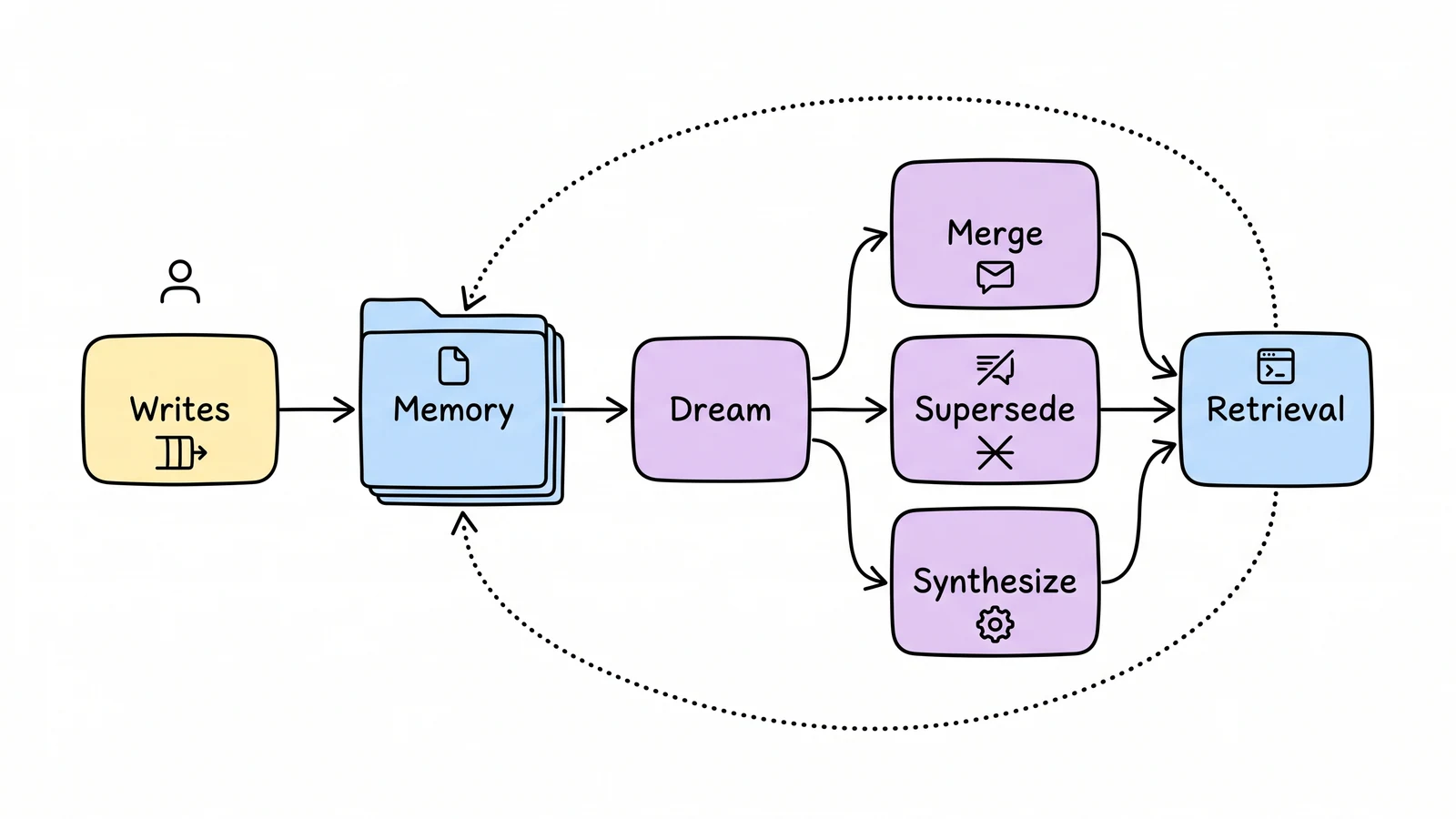
A whiteboard memory-maintenance loop showing fast writes, a durable memory store, a background Dream job, merge, supersede, synthesis, and cleaner retrieval.
New Runtime synthesis from the Mem0 Dream release.New Runtime synthesisOriginal source ->

Field note

Mem0 launched Dream, a background maintenance layer for agent memory. The release addresses a production problem that write-and-retrieve systems eventually accumulate: duplicate wording, facts that used to be true, and recurring patterns that never become an explicit memory.

Dream applies three operations. Merge folds a narrower memory into a newer, more complete replacement. Supersede connects an old fact to the fact that replaced it while retaining history. Synthesize creates a higher-level memory only when several independent observations support it and records the source memory IDs.

The maintenance lane stays off the request path, so add and search latency do not change. Nothing is deleted: lifecycle state and replacement pointers preserve auditability, immutable memories and exclude_from_dream are skipped, and clients can choose latest_only or include_merged retrieval behavior.

Dream is available to Pro and Enterprise users, runs weekly for eligible user IDs, and processes activity only after it is enabled. The broader architecture lesson is that durable agent memory needs compaction and provenance just as databases need vacuum, garbage collection, or LSM compaction.

Recommendation

Mem0 Dream introduces background merge, supersede, and synthesis operations so long-running agent memory can preserve history without polluting retrieval.

Discovery graph / next reads

Continue through New Runtime

Open the graph
  1. 01topicAgent Memory - New RuntimeExplore the agent-memory topic hub.
  2. 02topicMemory - New RuntimeExplore the memory topic hub.
  3. 03topicRetrieval - New RuntimeExplore the retrieval topic hub.
  4. 04archiveField NotesOpen the latest editorial analysis.
  5. 05source ledgerSource LedgerInspect the public source evidence graph.

These links are also published in this page's JSON twin and as typed edges in DiscoveryGraph v1.

Who read this page?Machine requests, hidden until opened

Loading the privacy-safe route aggregate...

Open the JSON contract