Firecrawl MCP Turns Web Search into a Bounded Agent Capability

Firecrawl's MCP launch points to a cleaner web-context surface for agents: OAuth for humans, API-key headers for server jobs, and keyless trials for low-friction testing.

Retrieval answer

Firecrawl's MCP launch points to a cleaner web-context surface for agents: OAuth for humans, API-key headers for server jobs, and keyless trials for low-friction testing. Firecrawl's MCP launch is a useful signal because it treats web access as an agent runtime interface, not just as another scraping SDK. The docs describe three access shapes.

New Runtime synthesiseditorial-diagram
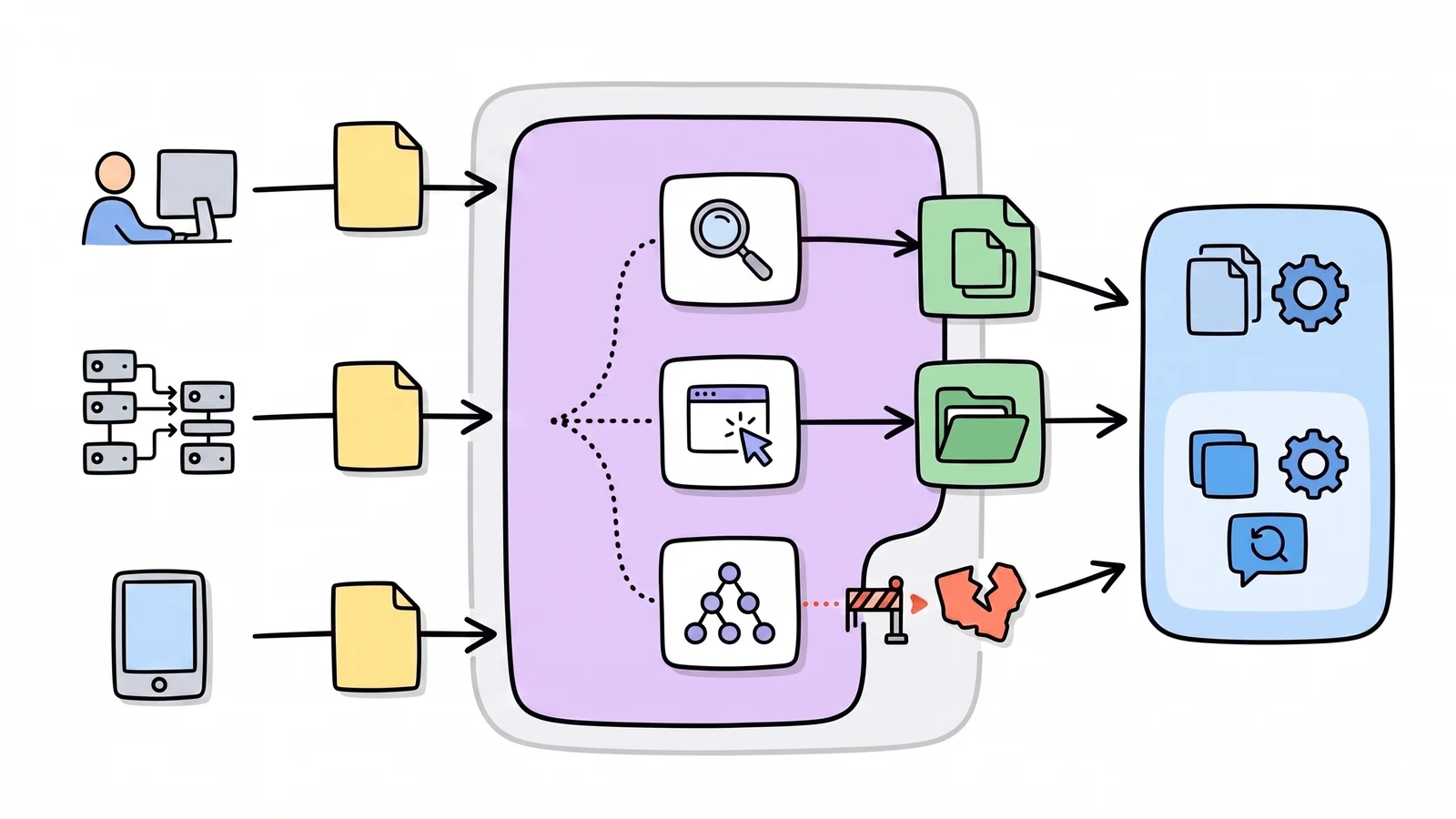
Hand-drawn systems diagram where user, server, and trial clients send request cards through one MCP gateway into web-context tools and an agent workspace.
Firecrawl's MCP surface separates interactive OAuth, unattended API-key use, and keyless trials while keeping web context behind a bounded gateway.New Runtime synthesis from public source inspectionOriginal source ↗
  1. ClientsThe docs describe separate paths for interactive clients, unattended jobs, and keyless trials.
  2. GatewayThe MCP endpoint exposes web-context work as a capability surface instead of a loose scraper call.
  3. OutputSearch, scrape, parse, and interact results become structured context for the agent workspace.

Firecrawl’s MCP launch is a useful signal because it treats web access as an agent runtime interface, not just as another scraping SDK.

The docs describe three access shapes. An interactive MCP client can use browser-based OAuth. A server, CI job, or script can call /v2/mcp with a Firecrawl API key in the Authorization header. A keyless path gives rate-limited access to Search, Scrape, and Parse for low-friction trials.

That distinction matters. Web context is one of the easiest capabilities to over-spend on: broad search, full-page extraction, dynamic pages, repeated parsing, and long results can consume context fast. Firecrawl’s X post says the new MCP uses 50% less context on /search, /scrape, and /interact; the architecture signal is the same even before treating that as a universal benchmark.

The more important product shape is permissioned routing. Human OAuth belongs in the human client path. Server-side credentials belong in headers, not URLs. Keyless trials should be visibly rate-limited. These are boring details, but they are what make a tool safe enough to put into agents that can run unattended.

New Runtime Read

This strengthens the shared-context-infrastructure pattern already visible in the site: agents need web evidence, but they should receive it through narrow, inspectable tool contracts.

For the newsroom loop, this is directly relevant. X can surface a lead, but the publishable path needs primary-source resolution, extraction, and compact evidence. Firecrawl MCP is interesting because it packages that path as an agent capability with access mode, rate-limit, and context-budget boundaries.

Recommendation

Firecrawl's MCP launch points to a cleaner web-context surface for agents: OAuth for humans, API-key headers for server jobs, and keyless trials for low-friction testing.

Discovery graph / next reads

Continue through New Runtime

Open the graph
  1. 01topicAgents - New RuntimeExplore the agents topic hub.
  2. 02topicContext engineering - New RuntimeExplore the context engineering topic hub.
  3. 03related materialA Vector Store Is Not An Agent Memory SystemShares agents and context engineering.
  4. 04related materialAnthropic Moves Large Tool Libraries Out Of ContextShares context engineering and mcp.
  5. 05related materialDr. Skill Audits What An Agent Loads Before It WorksShares context engineering and mcp.

These links are also published in this page’s JSON twin and as typed edges in DiscoveryGraph v1.

Who read this page?Machine requests, hidden until opened

Loading the privacy-safe route aggregate…

Open the JSON contract