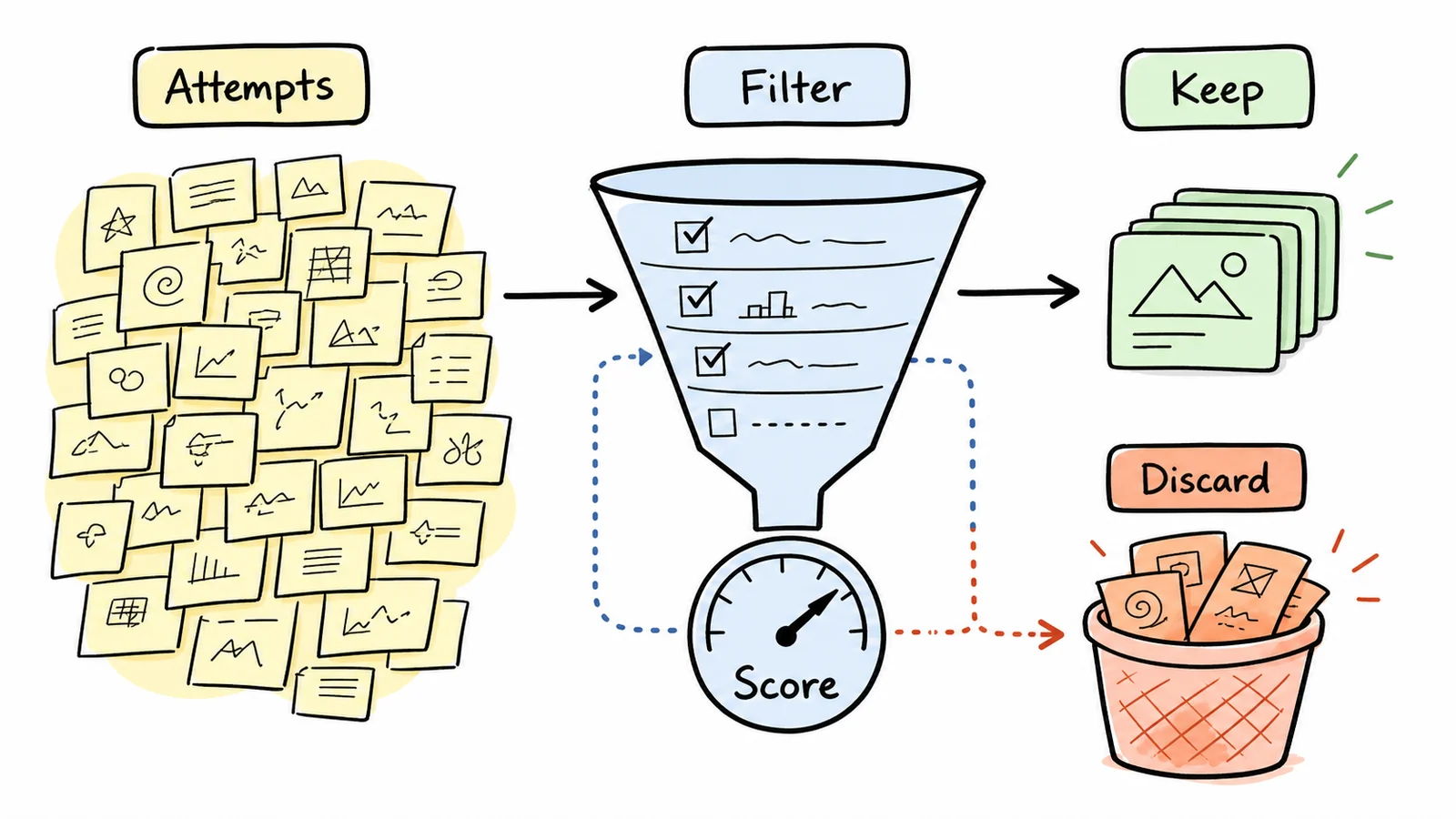
Benn Stancil’s phrase brute intelligence is useful because it names a practical AI work pattern: make many more attempts, then use judgment, tests, or market feedback to keep the few that matter. The value is not always a perfect first answer. Often it is the cheapness of iteration.
That explains why AI changes white-collar work unevenly. Tasks with clear selection criteria can absorb more attempts and improve quickly. Tasks without a strong verification surface can drown in plausible output. The same model capability looks powerful or wasteful depending on whether the surrounding process can select.
The industrial move is to redesign work around attempt volume. Draft more options, test more hypotheses, generate more variants, then build a pipeline that scores, filters, and cleans up the result. The human role shifts toward defining the target and operating the selection mechanism.
For New Runtime, this links agent economics with verification bandwidth. Brute force becomes intelligence only when the system has a way to tell which attempts deserve to survive.