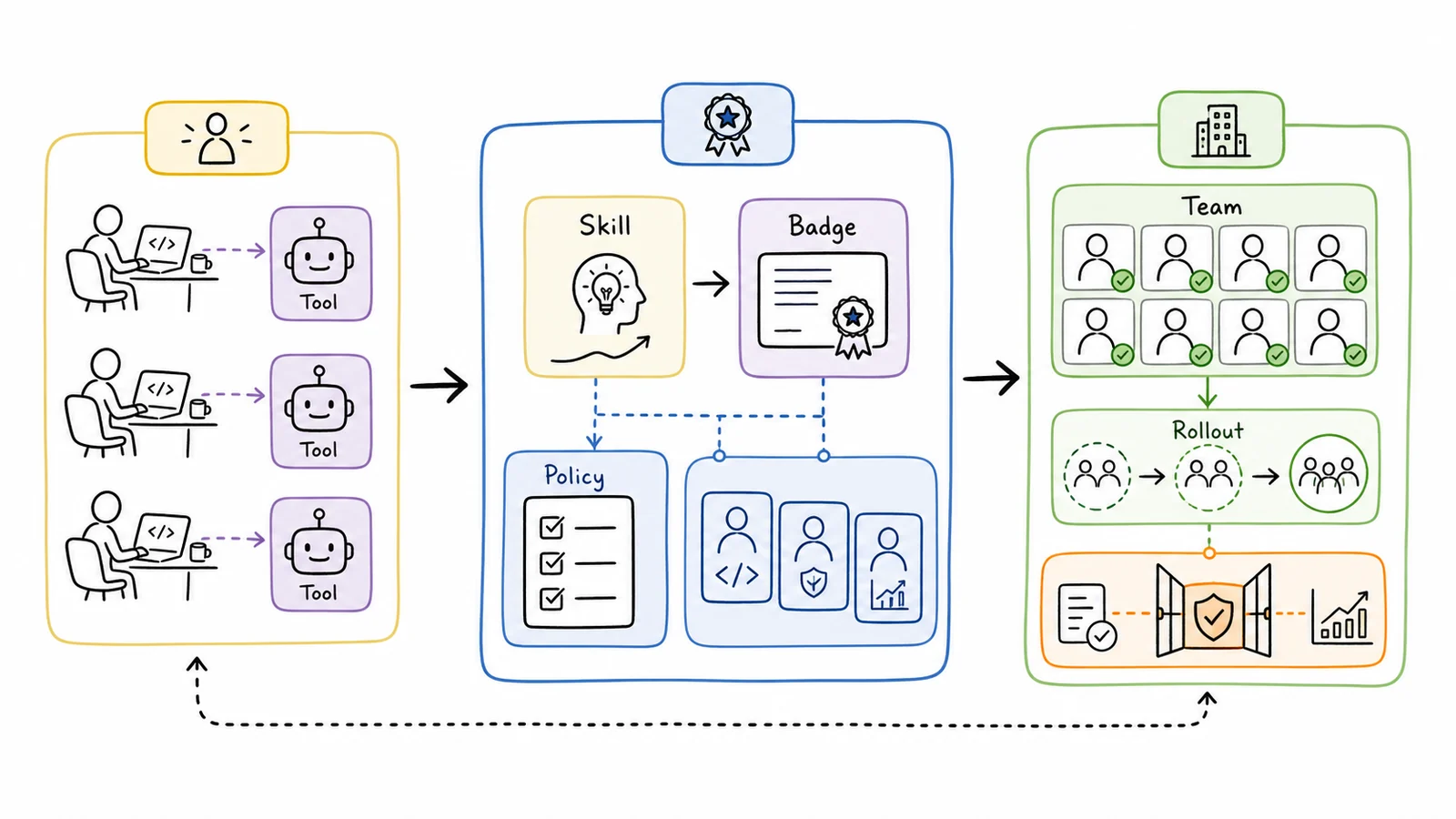
The Claude Code certification signal matters because it turns an agent tool into an organizational object. A certification is not just education; it is a way to say who is expected to use the system, what competent usage means, and how managers can talk about adoption without inspecting every prompt.
That is a different stage from early coding-agent enthusiasm. In the early stage, the unit was the individual developer trying a tool. In the managed stage, the unit becomes a role, a policy, a training path, and a rollout plan. Agentic development starts to look like a capability that can be budgeted, measured, and governed.
The certification layer also creates a second market around the product. The model and IDE integration still matter, but the durable surface becomes enablement: shared practices, internal standards, review expectations, and the vocabulary leaders use to decide whether the organization is ready.
What does certification change?
This note uses 1 public source, and that source frames the signal around three certifications rather than a generic training announcement. Certification creates named levels of competence, gives managers a rollout language, and makes agent usage easier to govern across teams.
The practical read: coding agents are moving out of the experimental corner. The next competitive layer is not only better completions; it is the operating system around adoption.