Parallel built Customer Watch to preserve high-touch customer support after manual monitoring stopped scaling.
The agent watches every account for changes in usage, errors, rate limits, payment failures, product mix, and relevant company news. Account managers describe desired thresholds in natural language. When a threshold is met, the system posts into a persistent Slack thread and brings in the responsible owner.
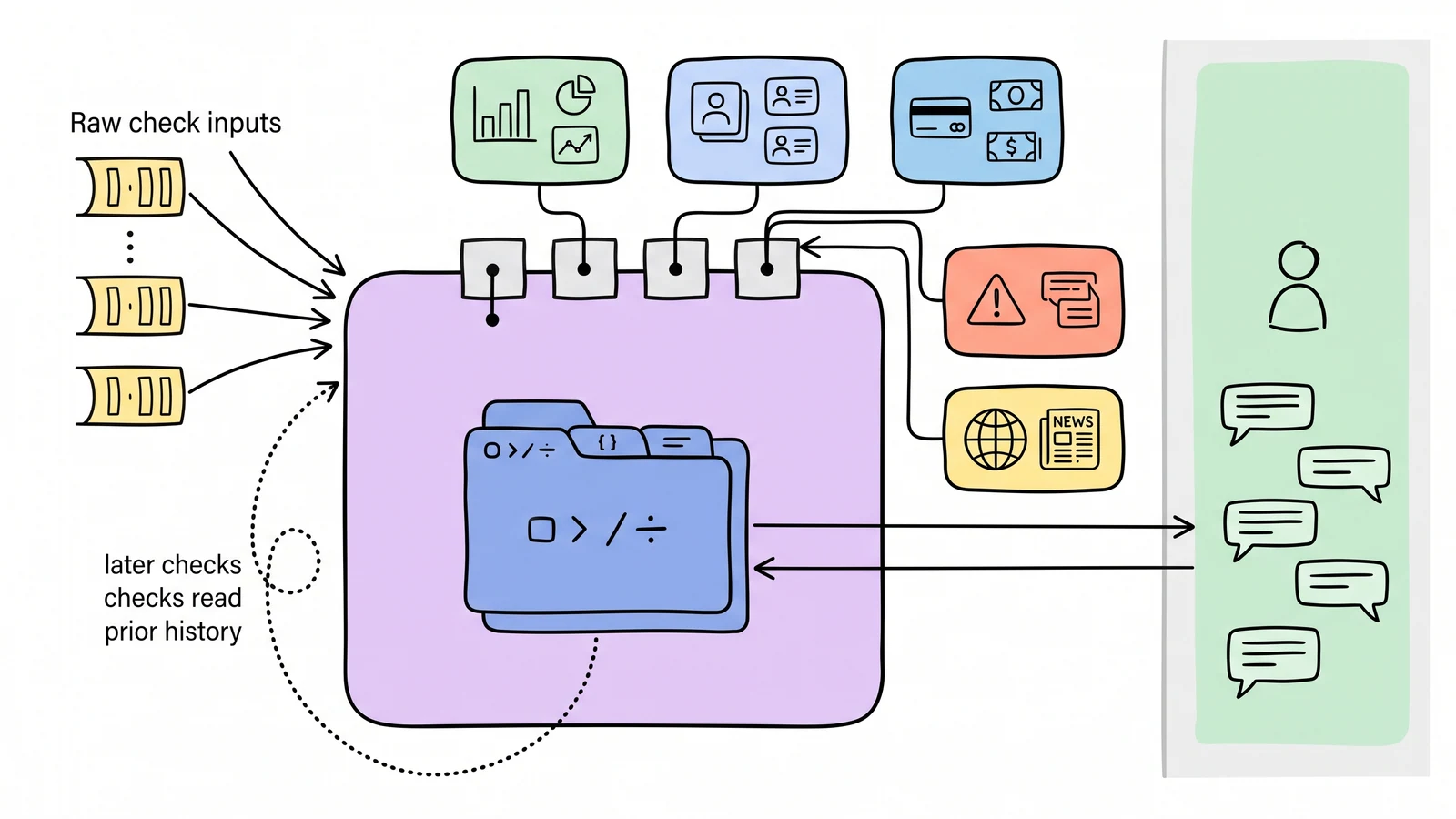
This is not one open-ended prompt. Customer Watch runs several scheduled pipelines for expansion signals, proactive support, payment issues, customer news, and self-serve account ranking. Analytics comes from Hex, account context from Attio, web change detection from Parallel Monitor, deeper summaries from Parallel Task, and delivery from Slack.
The runtime is deliberately narrow. A cloud-hosted Pi agent receives a per-account session file and a shared system prompt. Parallel pins the model, scopes the working directory to a limited repository, and exposes external systems through four wrappers rather than unrestricted access. Cron and a long-lived Node process provide the operating loop.
Durable state is a design choice, not an accidental chat history. Each account gets a history file, and every pipeline writes back what happened. Slack threads provide the human-facing record, while scheduled checks continue in the background. The agent can therefore notice a change without forcing the account manager to restate prior context.
For New Runtime, the architecture is the story: a useful background agent is a portfolio of deterministic schedules, scoped tools, persistent evidence, and owned delivery obligations. The model fills gaps inside that structure. It does not replace it.