Cursor’s swarm report is interesting, but the stronger evidence is the repository it released.miniSQLite is a Rust reimplementation of the SQLite dialect, planner, executor, transactions, storage engine, and on-disk file format.
The public surface is intentionally small: one Connection type with four primary methods for opening, executing, and querying. Under that surface sits roughly 200,000 lines of Rust across 14 crates, 5,650 tests, one external dependency, and no unsafe in library code, according to the repository.
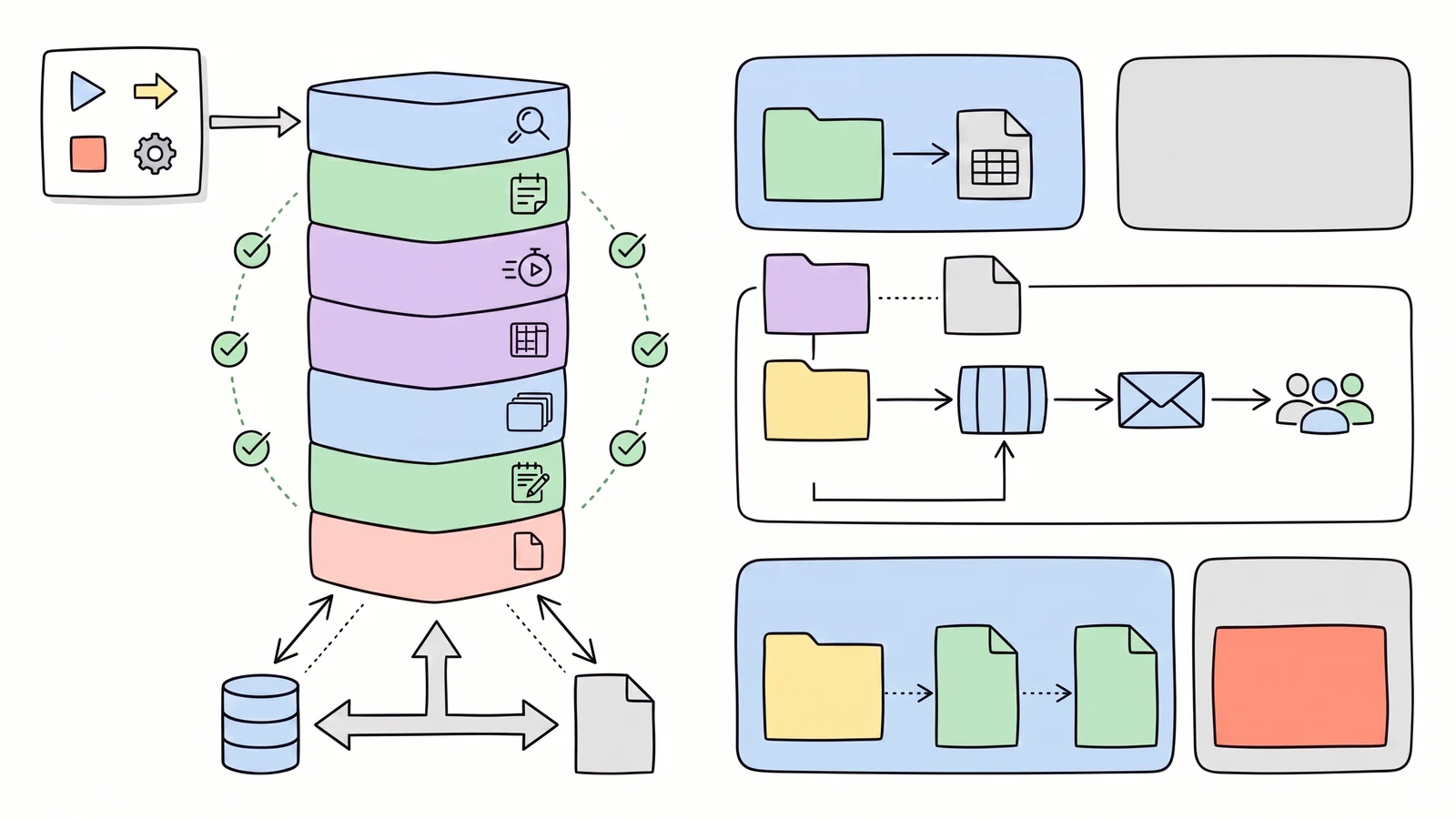
That contrast is the architectural point. A clean API does not imply a small problem. The implementation separates parsing, binding and planning, execution, catalog state, expression evaluation, b-trees, paging, rollback journal, WAL, and byte-level file-format logic.
The seams are not only documentation. Architecture tests assert that each named seam has one trait in its designated crate, that there are no orphan crates, and that feature flags do not select alternate behavior. This turns structural drift into a failing test instead of a convention another worker can ignore.
Compatibility is the real pressure test
The repository claims bidirectional format compatibility: files created by sqlite3 can be opened and modified by miniSQLite, and SQLite can read the result back. The test surface includes WAL files, UTF-16 encodings, auto-vacuum pointer maps, overflow chains, freelists, and page sizes from 512 to 65,536 bytes.
The project is not a drop-in SQLite replacement. It has no CLI, C API, or prepared-statement interface, and the public API is deliberately narrower. Those exclusions make the claim more credible because the boundary is visible.
For agent engineering, the repository changes the evaluation question. “Did the swarm finish?” is too weak. The useful checks are whether the artifact has enforced module boundaries, reproducible tests, compatibility fixtures, and a surface small enough for humans to review.
The Cursor experiment explains how the work was coordinated. The repository lets outsiders inspect what that coordination produced.