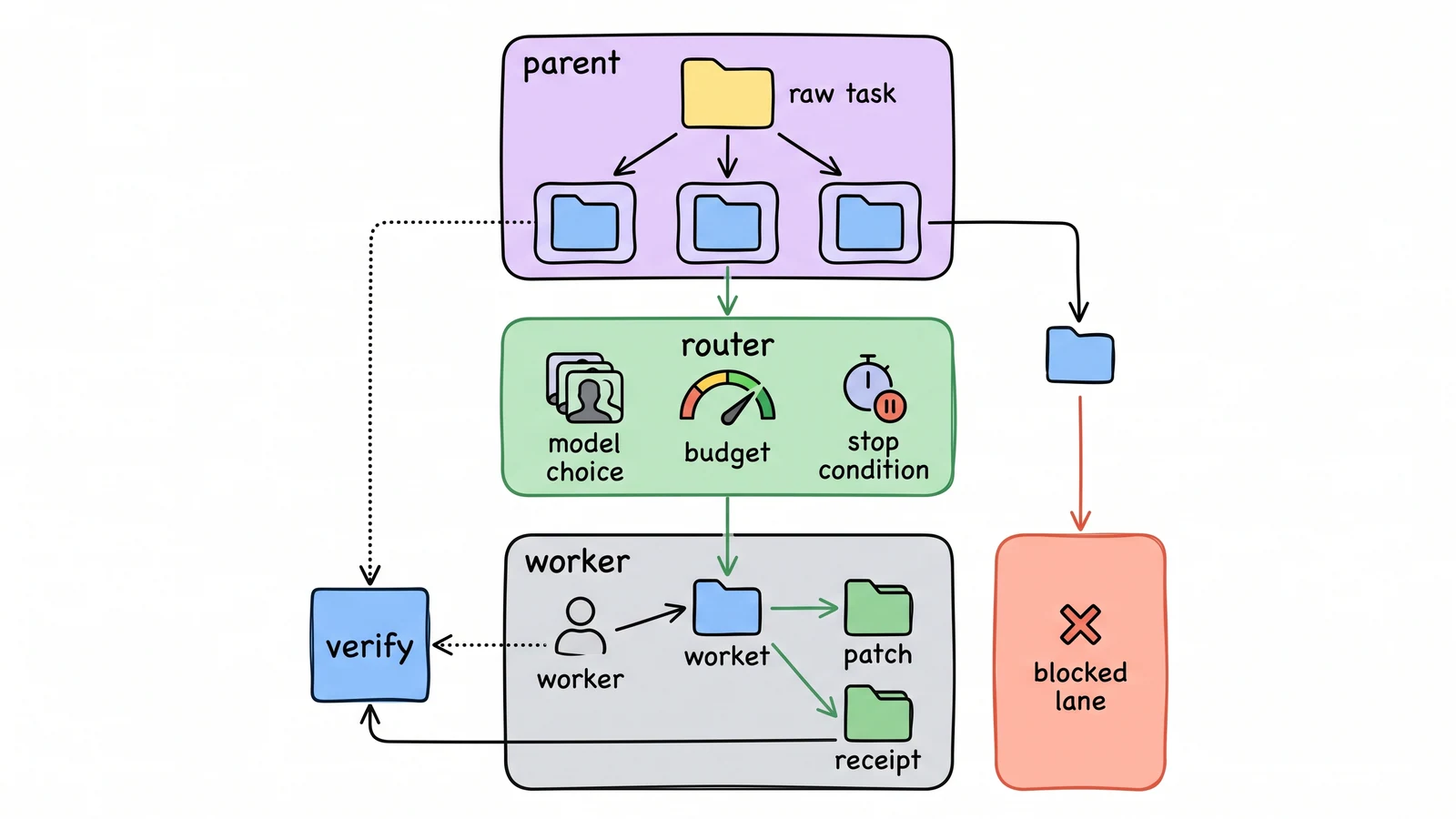
The Luna-worker signal points at a pattern that matters more than the exact model name: delegate bounded work to a cheaper or specialized worker only when the parent agent can encode the contract.
Without that contract, model routing is just a config trick. The worker needs a task boundary, budget, stop condition, allowed files, expected artifact, and verification rule. The parent needs a receipt that can be checked before the result becomes part of the main context.
The syntax still needs to be verified against the current Codex surface before anyone treats it as a durable setup. But the operating idea is stable: save expensive model context by moving narrow work into worker lanes with explicit acceptance checks.
For New Runtime, this belongs next to the drip publisher and OpenClaw boundary. Delegation should be cheaper, but it also has to be accountable: what was assigned, what came back, which check passed, and when the parent agent should refuse the result.