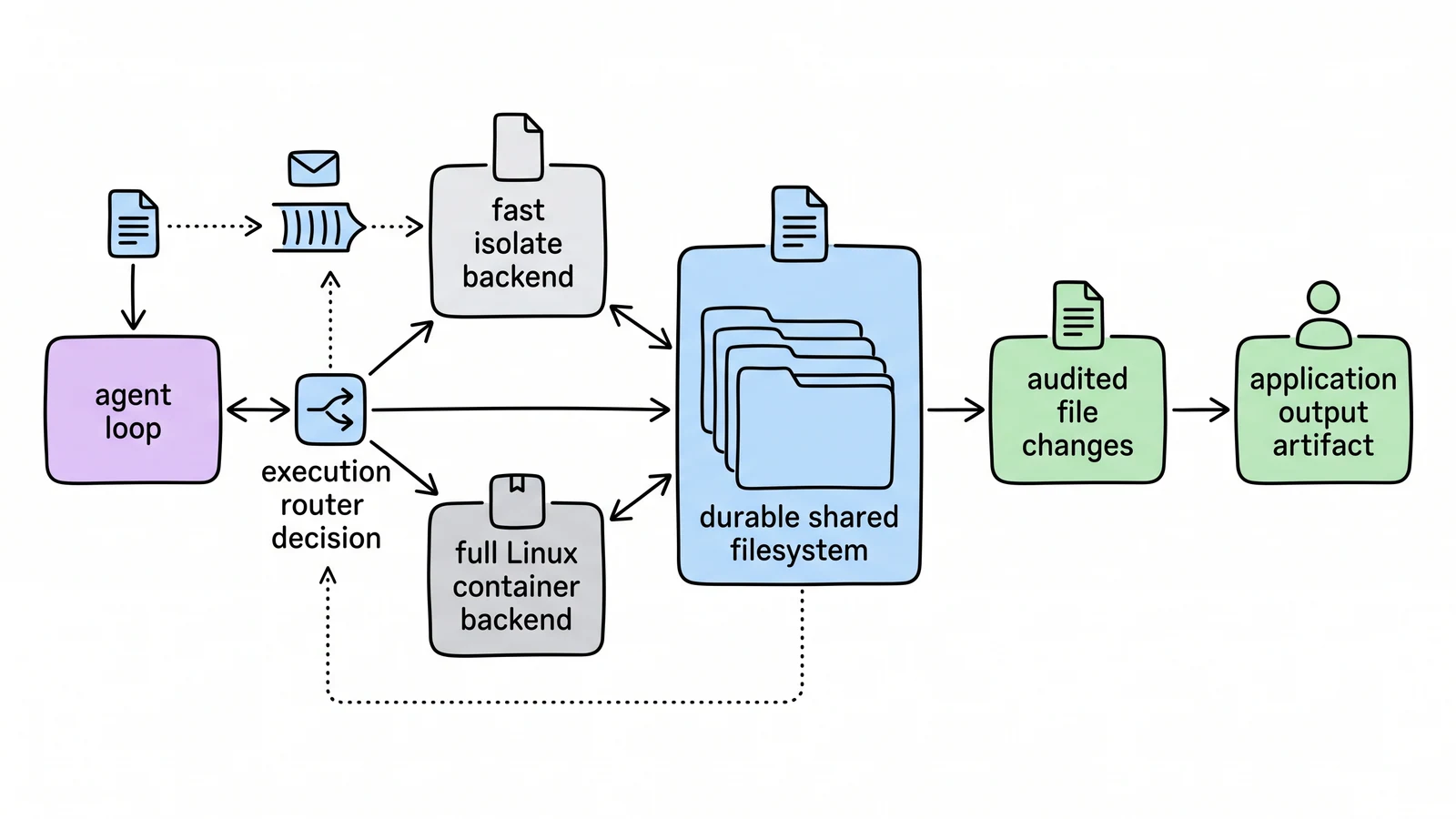
Cloudflare Computer gives an agent a familiar computer contract: a durable filesystem, read-write-edit-list operations, and one exec interface backed by different execution environments. State remains shared while the runtime is selected for the job.
Light file, data, and Git operations can run in an isolate through Dynamic Workers. Linux, npm, and native binaries move to a Cloudflare Container where the same filesystem is mounted through FUSE and synchronized back. The operations can be gated, observed, and audited without forcing every step into the heaviest environment.
Sunil Pai's broader argument is that the harness becomes the application. The agent loop receives tools, a workspace, and a filesystem, then produces the interface or connects to an existing product surface. That makes runtime selection part of product architecture rather than invisible infrastructure.
The economic boundary is explicit: a container per agent and per user does not scale. Cloudflare's stated target is for containers to handle less than 10% of the work, with the agent choosing the heavier backend only when an isolate is insufficient. That is a target, not a universal benchmark. Measure fallback-to-container rate, audit file mutations, and require shared state to survive backend changes.