Field noteJul 31, 20261 min read1 source

Wafer's Kimi K3 Run Makes Prefill Memory A Hardware Economics Story

Wafer describes running Kimi K3 on AMD MI355X and frames the result around prefill optimizations, throughput, performance per dollar, and memory as a potential inference moat.

In one minute

The processor marked this reserve only because of broad Kimi prior coverage; the recovered angle is distinct: memory bandwidth, prefill economics, and AMD inference performance per dollar.

New Runtime synthesiseditorial-diagram
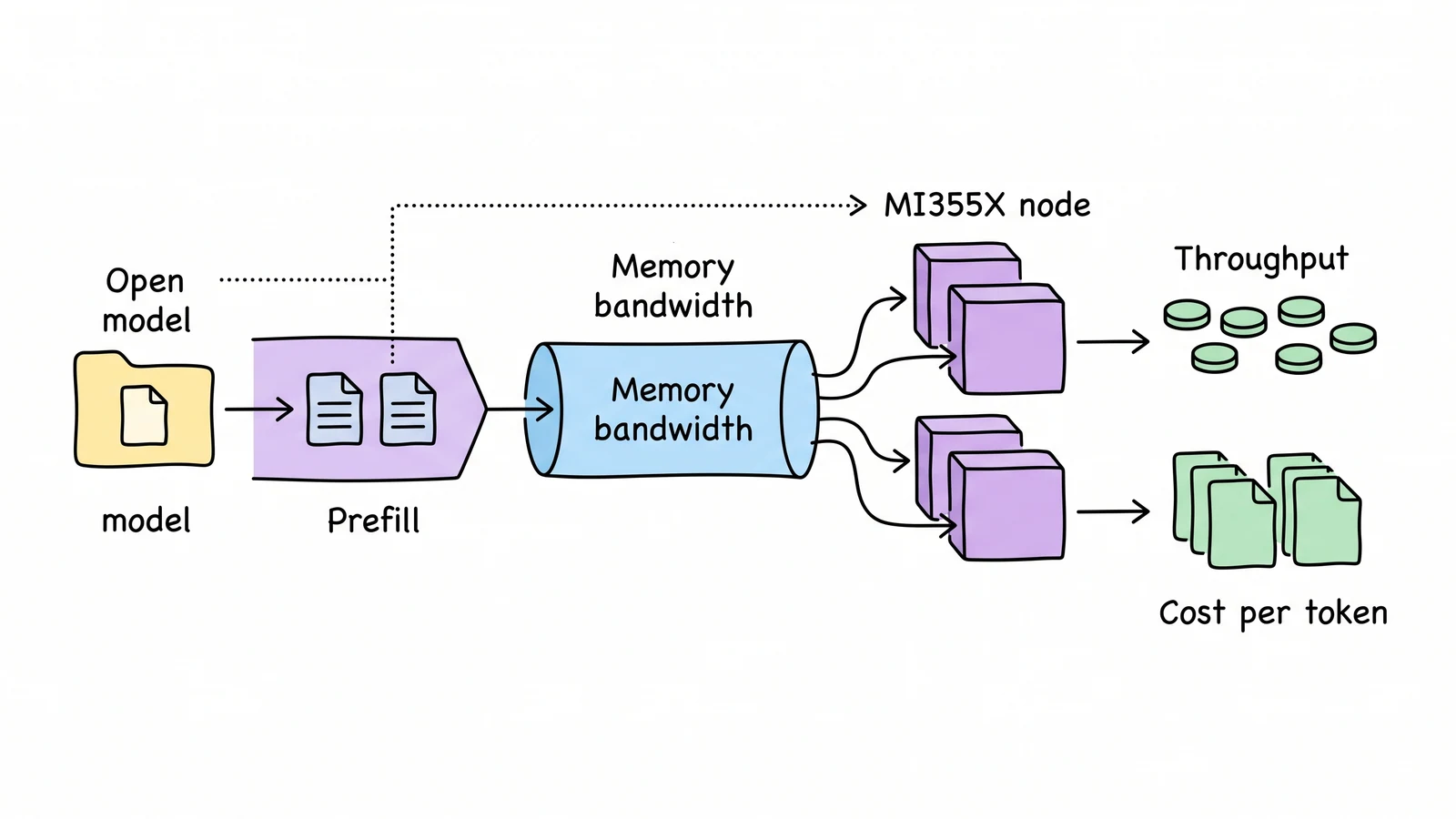
A whiteboard infrastructure diagram showing Kimi K3 serving moving through prefill, memory bandwidth, AMD MI355X nodes, throughput, and cost-per-token economics.
New Runtime synthesis.New Runtime synthesisOriginal source ->

Wafer's Kimi K3 post should not be treated as just another Kimi model item.

The interesting part is the infrastructure economics. Wafer frames the run around AMD MI355X, prefill optimizations, throughput, and performance per dollar. That shifts the discussion from model leaderboard novelty to the hardware-and-memory path that determines whether open models can be served competitively.

For New Runtime, the useful angle is memory as an inference moat. Long-context and agentic workloads make prefill, KV-cache handling, bandwidth, and node-level throughput more important than simple tokens-per-second headlines. The model matters, but the serving architecture is where the practical advantage can appear.

Evidence / sources

  1. 1wafer.ai/blog/kimi-k3-mi355x
All Field Notes

Next reads

Read next

Open the graph
  1. 01topicInferenceExplore the inference topic hub.
  2. 02topicHardwareExplore the hardware topic hub.
  3. 03topicOpen ModelsExplore the open-models topic hub.
  4. 04archiveField NotesOpen the latest editorial analysis.
  5. 05source ledgerSource LedgerInspect the public source evidence graph.
Who read this page?Machine requests, hidden until opened

Loading the privacy-safe route aggregate...

Open the JSON contract