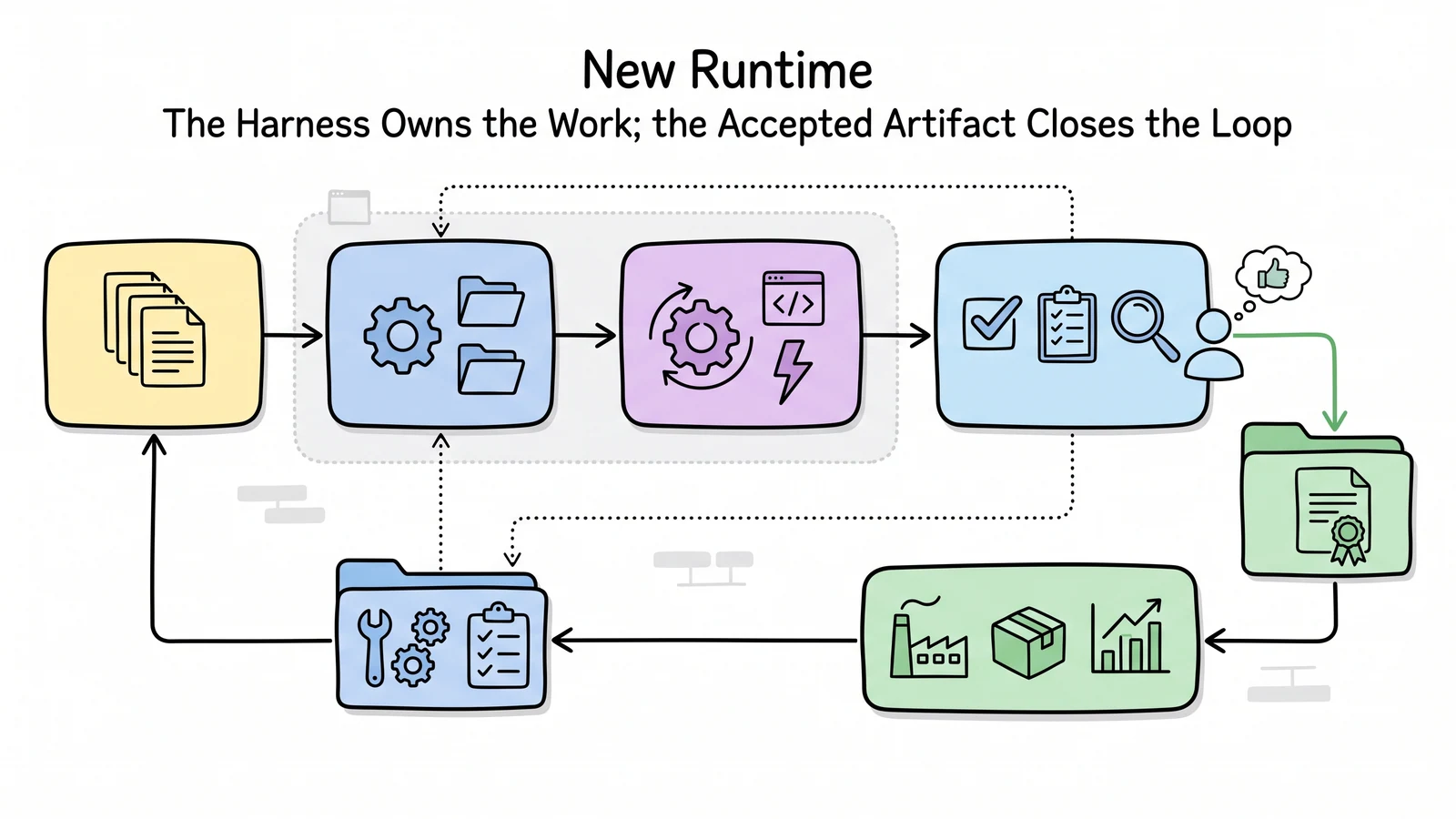
The Harness Owns the Work; the Accepted Artifact Closes the Loop

Agentic engineering is moving from one prompt to a persistent harness that manages environments, cost, review, release, and maintenance.

Retrieval answer

The output metric is shifting from model calls to accepted work: merged changes, shipped artifacts, and maintained systems, with review burden and vendor claims kept visible.

New Runtime synthesiseditorial-diagram
New Runtime whiteboard diagram explaining the harness owns the work; the accepted artifact closes the loop.
New Runtime synthesis from databricks.com.New Runtime synthesisOriginal source ->

Field note

Agentic engineering is moving from one prompt to a persistent harness that manages environments, cost, review, release, and maintenance.

New Runtime reading: The output metric is shifting from model calls to accepted work: merged changes, shipped artifacts, and maintained systems, with review burden and vendor claims kept visible.

Evidence boundary: this item uses the listed public sources and keeps vendor, author, or reporter claims attributed. The queued page is an editorial synthesis, not an independent validation of every reported metric.

Recommendation

Agentic engineering is moving from one prompt to a persistent harness that manages environments, cost, review, release, and maintenance.

Discovery graph / next reads

Continue through New Runtime

Open the graph
  1. 01topicHarness Engineering - New RuntimeExplore the harness-engineering topic hub.
  2. 02topicCoding Agents - New RuntimeExplore the coding-agents topic hub.
  3. 03topicWorkflow - New RuntimeExplore the workflow topic hub.
  4. 04archiveField NotesOpen the latest editorial analysis.
  5. 05source ledgerSource LedgerInspect the public source evidence graph.

These links are also published in this page's JSON twin and as typed edges in DiscoveryGraph v1.

Who read this page?Machine requests, hidden until opened

Loading the privacy-safe route aggregate...

Open the JSON contract