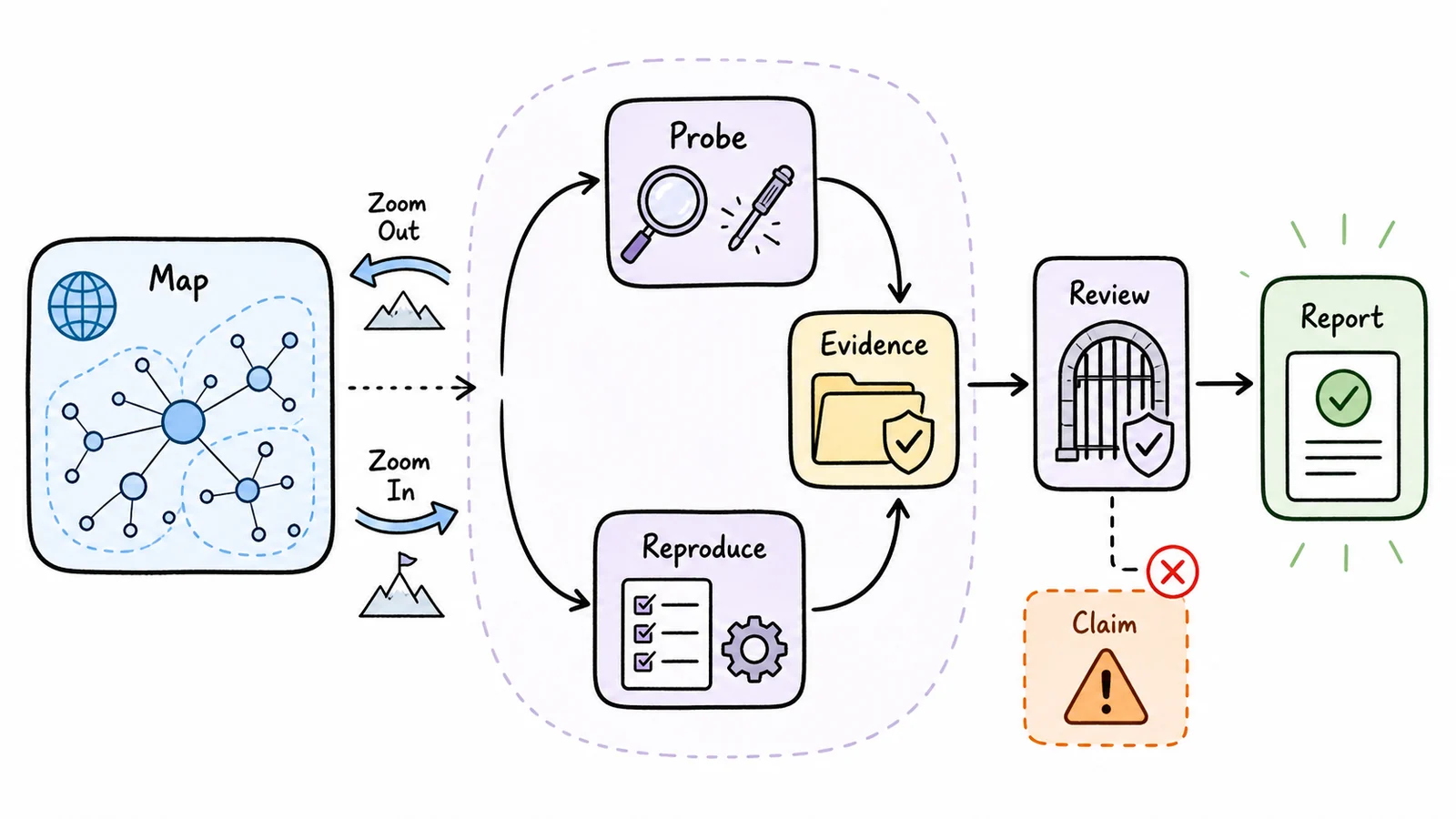
RAPTOR Loop Hunt is a useful security signal because it packages the hunt itself as an agent workflow. The interesting part is not just autonomous vulnerability search. It is the attempt to give the agent a repeatable structure for moving between broad exploration, targeted probing, evidence collection, and report writing.
Security is a domain where unchecked generation is especially fragile. A convincing vulnerability claim is cheap to write and expensive to trust. That makes loop design central: each finding needs a path from hypothesis to reproduction to evidence, with the human able to inspect where the claim came from.
The skill packaging matters too. If the workflow lives as a Claude Code skill, then the know-how is not trapped in a chat transcript. It can be reused, revised, and run against different targets with a more consistent audit trail.
What does the loop have to prove?
This note tracks 1 public source, so the evidence is about workflow packaging rather than proven vulnerability yield. The loop has to prove that a candidate finding can move from map to probe, reproduction, evidence, review, and report without turning an unverified claim into output.
For New Runtime, this fits the broader move from ad hoc agent use to operationalized agent routines. The agent does not replace the security process; it becomes a worker inside a process that has explicit gates.