Qualifire Puts Small Judges In The Runtime Path

Qualifire positions reliability as continuous evaluation, real-time guardrails, observability, prompt management, and low-latency small judge models around agent actions.

Retrieval answer

Qualifire positions reliability as continuous evaluation, real-time guardrails, observability, prompt management, and low-latency small judge models around agent actions. #Qualifire #Guardrails #Evals #AgentSafety Qualifire fits the current shift well: agent reliability can no longer live only in pre-production evals. If an agent acts inside a product, control has to sit at the action boundary - in runtime, with context, observability.

New Runtime synthesiseditorial-diagram
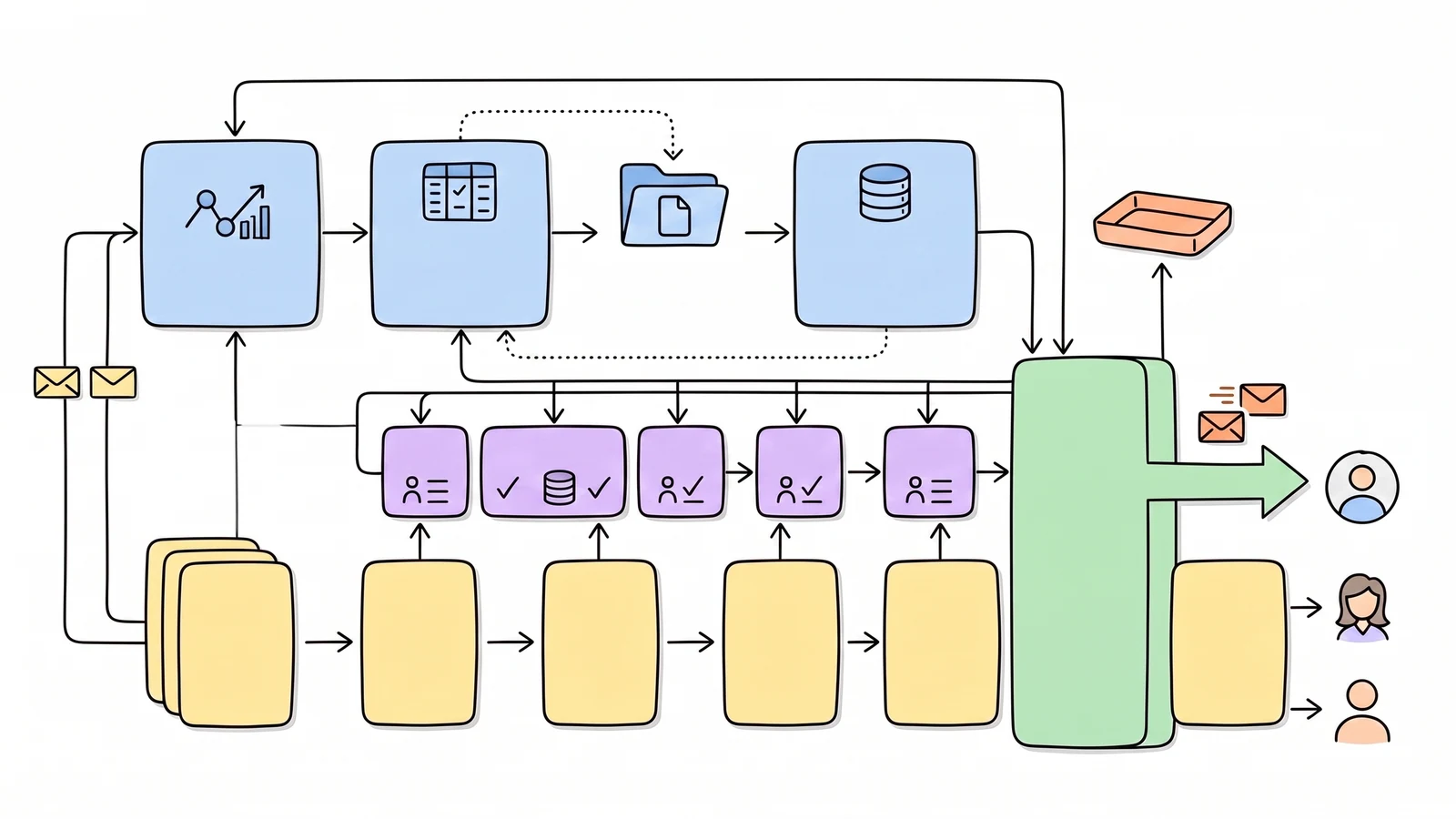
A whiteboard diagram showing agent actions passing through small judge models, contextual guardrails, observability, prompt management, and policy enforcement before reaching users.
Qualifire's product claim is a runtime reliability layer: small judges evaluate actions continuously, not only during offline eval runs.New Runtime synthesis from Qualifire product materialOriginal source ↗
  1. Small judgesLow-latency policy and reliability checks sit close to the agent path.
  2. Runtime guardrailsActions are evaluated with context before they reach production users.
  3. Evaluation loopObservability and data curation feed future tests and policy updates.

#Qualifire #Guardrails #Evals #AgentSafety

Qualifire fits the current shift well: agent reliability can no longer live only in pre-production evals. If an agent acts inside a product, control has to sit at the action boundary - in runtime, with context, observability, and the right to stop a bad step.

Qualifire presents this as one control plane: contextual guardrails, evaluations, observability, real-time policy enforcement, prompt management, and data curation. One emphasis is small judge models: specialized SLM judges that should run quickly and cheaply next to the agent flow.

This does not remove the need for larger eval suites. It changes where they close the loop: not “we ran tests once a week,” but “every meaningful agent action is checked by the same policy loop that learns from observations.”

For New Runtime, this is close to the publication boundary. Source, image, handoff, preview, receipt, and approval are also guardrails, just for an editorial agent. The more actions we give to the system, the less we can afford to leave verification inside the prompt.

Evidence / sources

  1. [1]https://www.qualifire.ai/

Recommendation

Qualifire positions reliability as continuous evaluation, real-time guardrails, observability, prompt management, and low-latency small judge models around agent actions.

Discovery graph / next reads

Continue through New Runtime

Open the graph
  1. 01related materialRogue Turns Agent Risk Into A Test HarnessShares agent safety.
  2. 02related materialGumclaw: An AI Company Operating SystemContinue with a related New Runtime material.
  3. 03related materialABBEL Treats Memory as an Explicit Belief StateContinue with a related New Runtime material.
  4. 04related materialA Software Factory Connects Agents Through Verified OutcomesContinue with a related New Runtime material.
  5. 05related materialAmazon Quick Makes Catalog Semantics The Agent BoundaryContinue with a related New Runtime material.

These links are also published in this page’s JSON twin and as typed edges in DiscoveryGraph v1.

Who read this page?Machine requests, hidden until opened

Loading the privacy-safe route aggregate…

Open the JSON contract