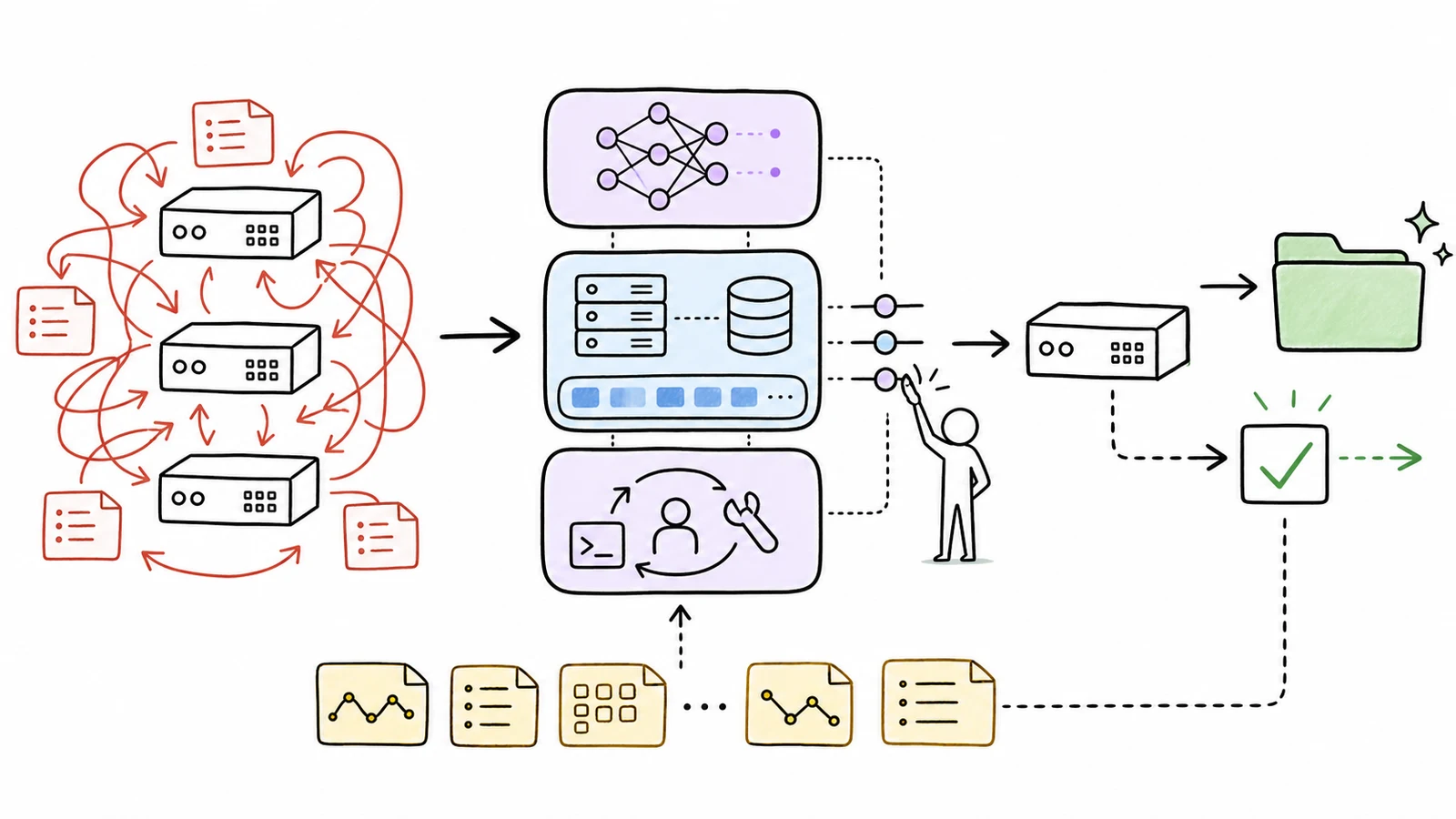
OpenAI’s GPT-5.6 efficiency post is more important than a model-launch footnote because it treats agent performance as a stack problem.
The claim is not just that GPT-5.6 is cheaper or faster. OpenAI describes three compounding layers: the model is trained to finish tasks with fewer wasted tokens, the inference system extracts more output from the same hardware, and the agentic harness cuts repeated work inside Codex and ChatGPT Work.
That framing is useful because agents multiply every inefficiency. A long task can include dozens of model requests and tool calls. If every step re-sends bloated context, reloads tools, or misses cacheable prefixes, the cost of the task is not dominated by one bad prompt. It is dominated by repeated overhead.
What changed
OpenAI says GPT-5.6 Sol helped analyze production traffic, tune routing strategies, and optimize production kernels. The post says those kernel and serving improvements reduced end-to-end serving costs by 20%.
It also describes speculative decoding work where GPT-5.6 Sol improved its own draft model by running experiments on the speculator architecture and monitoring training. OpenAI reports that the resulting improvements increased token-generation efficiency by more than 15%.
The agent harness section is the part that connects directly to New Runtime. OpenAI says the harness uses deferred discovery so integrations, custom MCP tools, skills, and plugins do not all sit in context by default. Tool output is capped at 10,000 tokens unless the model asks for another limit. Model-visible history is treated as append-only to preserve prompt-cache prefixes, tools are presented in deterministic order, and runtime approval policy is applied during execution instead of being embedded into tool definitions.
New Runtime Read
This strengthens the pattern that compute savings come from runtime architecture, not just model selection.
For agent systems, “efficiency” has to mean completed useful work per dollar, per unit of verification, and per unit of human attention. The model matters, but the surrounding harness decides how often the model repeats itself, how much stale context it sees, whether cache prefixes survive, and whether infrastructure changes are verified safely.
The operational takeaway is blunt: if an agent product has no context budget, no tool discovery policy, no cache-preserving history discipline, and no verification loop, it will turn model progress into avoidable spend.