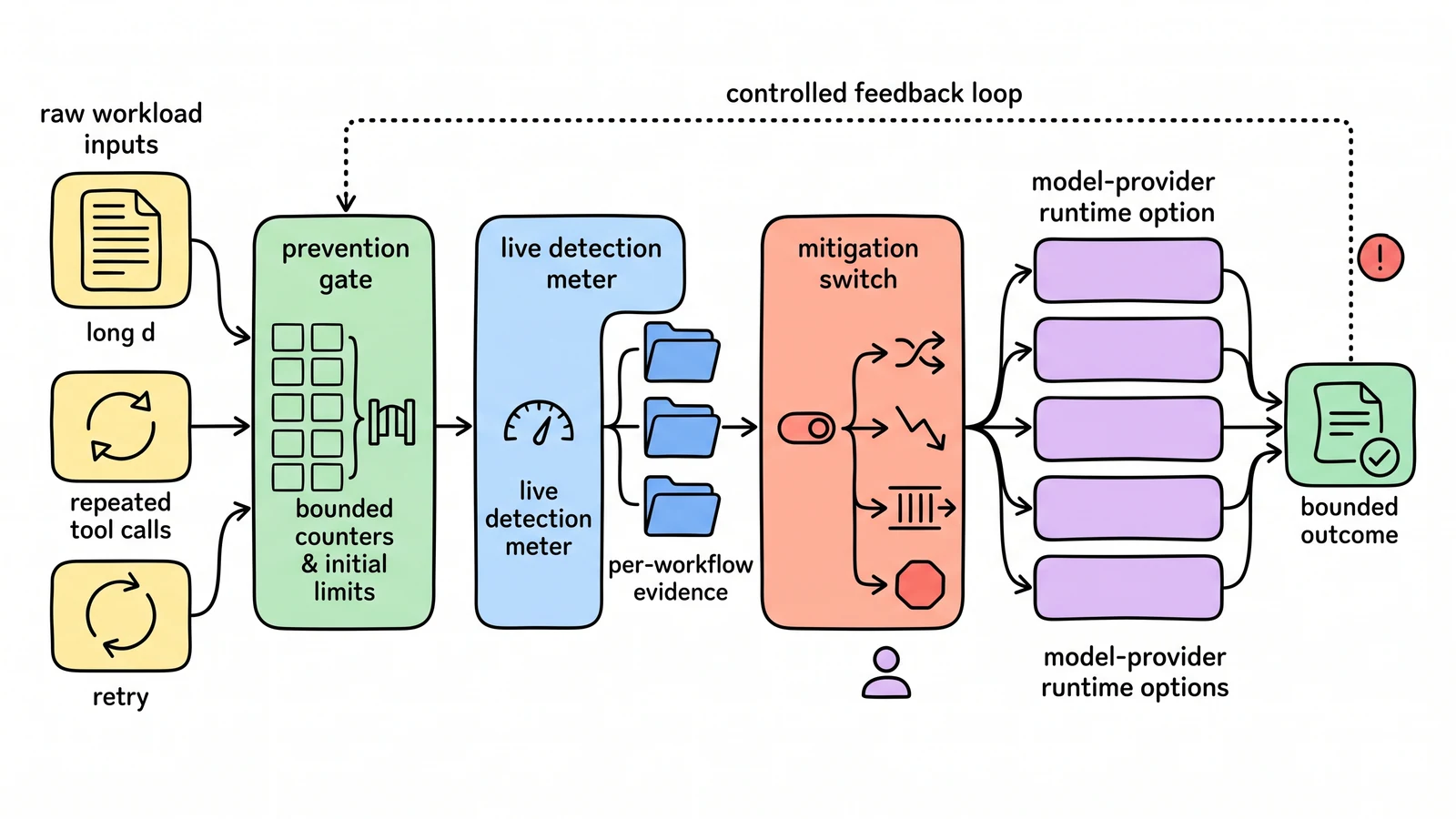
LLM spending is unusually volatile because the resource demand is partly created by conversation shape. A longer user document, a verbose system prompt, a malformed response retry, or an agent that turns one action into four model calls can multiply cost without a deployment or configuration change.
Mozilla.ai’s essay proposes treating this as operational risk rather than a delayed finance report. The useful structure is prevention, detection, and mitigation.
Prevention belongs in the execution contract: allowed models, maximum calls, retry limits, context and output budgets, concurrency, and a cost ceiling for each workflow. Detection needs to be close to the request path, because provider billing dashboards may report after the expensive work has already completed. Teams need cost and token observations by tenant, workflow, model, and outcome, not only a monthly total.
Mitigation is the controlled failure mode. A gateway can move background work to a cheaper route, reject new jobs, shorten an agent loop, disable a costly tool branch, or stop a tenant-specific workload without turning off the entire product.
This connects the previous Vercel and Ramp stories. Vercel supplies hard budget gates. Ramp optimizes routes inside caller-defined quality and latency boundaries. The missing layer is a workflow risk policy that decides how much economic exposure an unattended agent is allowed to create before either mechanism acts.