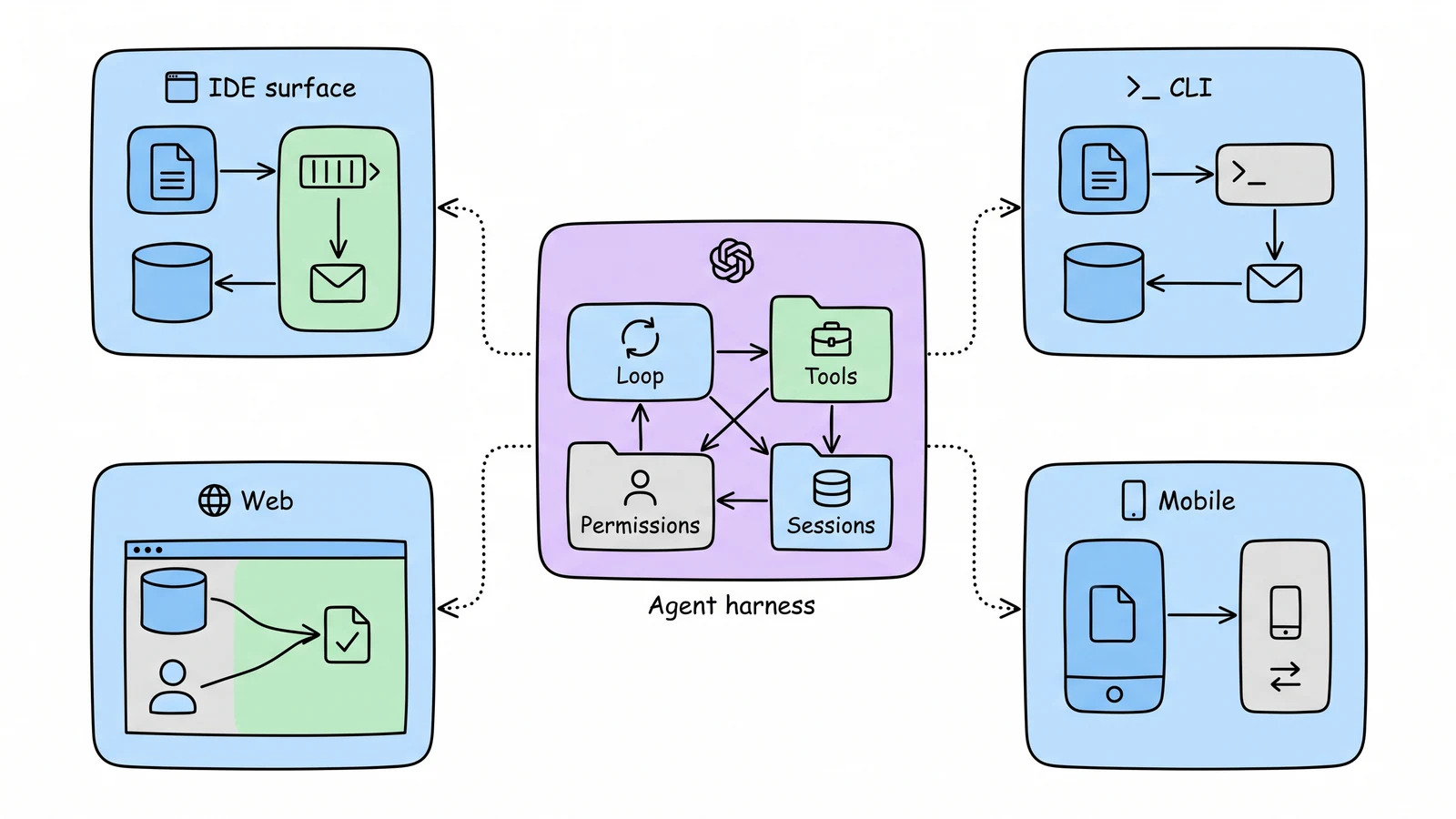
Kiro's architectural move is to separate the agent engine from the interface that hosts it. The shared harness owns the loop, tools, permissions, sessions, configuration, and planning behavior; IDE, CLI, web, and mobile can then optimize interaction for different contexts without reimplementing the agent.
That turns cross-surface consistency into a runtime problem. A capability-based permission model, tag-based tool selection, hooks, and spec workflows can evolve once and ship to multiple clients. Each surface still has its own constraints: terminal automation, hands-on IDE work, autonomous cloud sessions, and mobile review are not the same interaction.
A unified harness should not be confused with universally portable session state. Kiro's own materials still separate current shared-engine work from richer session packaging and migration. The implementation order is sound: stabilize engine contracts first, then make context and artifacts portable without pretending every client can resume every execution state.