Field noteAug 4, 20261 min read2 sources

Kiro Crew Adds A Long-Running Work Layer Above The Shared Agent Harness

Kiro Crew extends a unified agent harness with schedules, durable memory, skills, multiple cooperating agents, approval gates, and app connections for work that persists beyond one session.

In one minute

The shared harness explains how one agent runs across surfaces; Crew is the next layer for persistent jobs and coordinated agents. Long duration increases the need for checkpoints, bounded authority, observable state, and owner approvals.

New Runtime synthesiseditorial-diagram
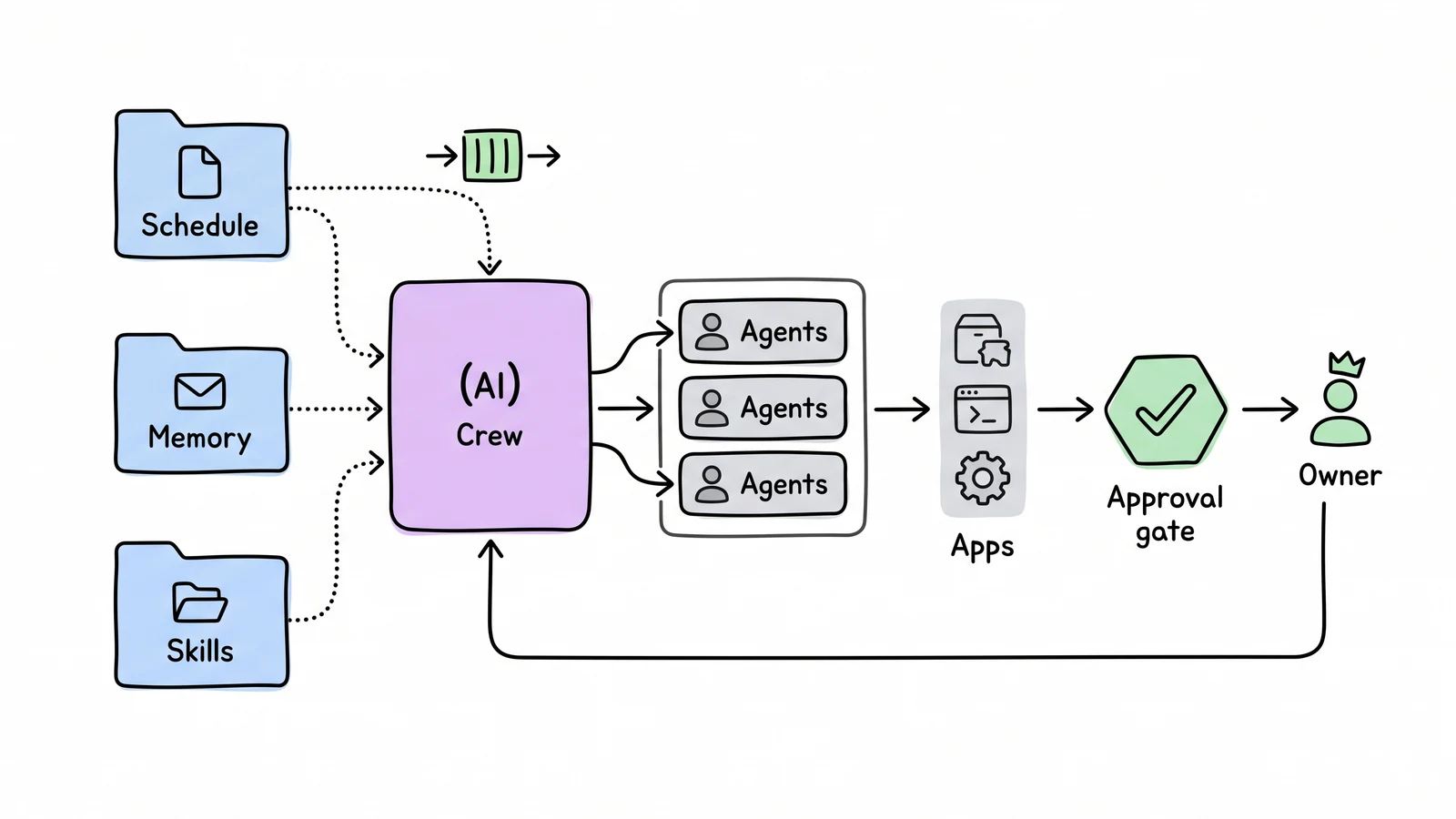
A whiteboard hub-and-spoke diagram showing a persistent crew using schedules, memory, and skills to coordinate agents, with an owner approval gate before app actions.
New Runtime synthesis from Introducing Kiro Crew.New Runtime synthesisOriginal source ->

Kiro's unified harness explains how one agent engine can serve IDE, CLI, web, and mobile. Kiro Crew moves one level up: work that persists over time, wakes on schedules, carries memory and skills, coordinates multiple agents, and connects to applications.

Long-running work changes the failure model. A single interactive session can rely on immediate user correction; a scheduled crew needs explicit state, checkpoints, retry limits, ownership, and approval gates before external actions. Memory must distinguish durable facts from temporary execution state, and every agent needs a defined role and permission set.

The useful product series is therefore engine, surface, and operation. The harness standardizes execution; Crew organizes jobs and collaboration; owner-facing clients supervise progress and approve irreversible steps. Persistence is valuable only when the system can explain what is running, why it woke, what it changed, and how to stop it.

Evidence / sources

  1. 1kiro.dev/blog/introducing-kiro-crew
  2. 2kiro.dev/blog/one-agent
All Field Notes

Next reads

Read next

Open the graph
  1. 01topicLong Running AgentsExplore the long-running-agents topic hub.
  2. 02topicAgent MemoryExplore the agent-memory topic hub.
  3. 03topicSchedulesExplore the schedules topic hub.
  4. 04archiveField NotesOpen the latest editorial analysis.
  5. 05source ledgerSource LedgerInspect the public source evidence graph.
Who read this page?Machine requests, hidden until opened

Loading the privacy-safe route aggregate...

Open the JSON contract