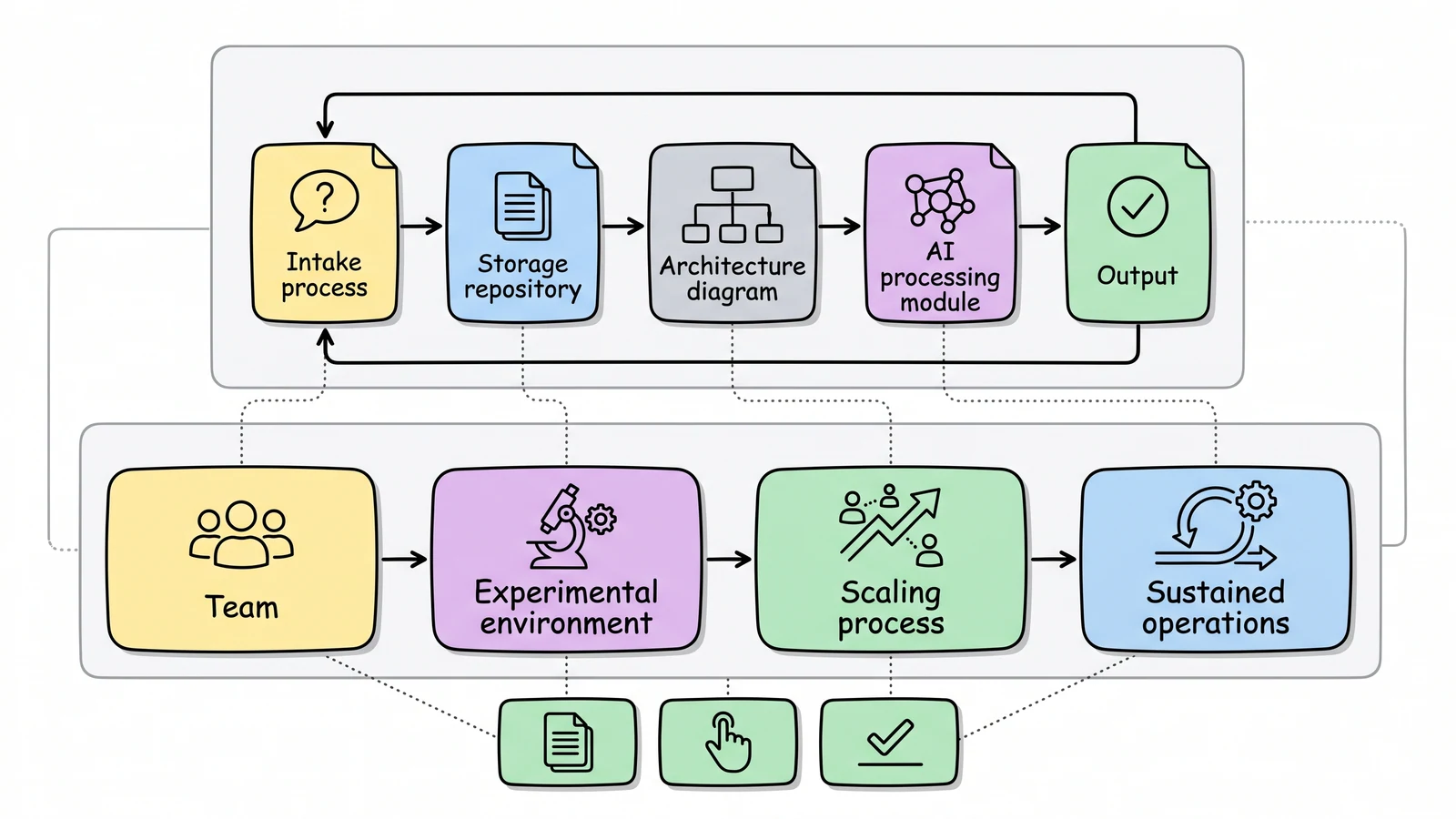
A frontier team is defined by a changed operating model, not by broad access to an AI coding assistant. This matters now because organizations are discovering that licenses can spread faster than the shared environment required for reliable agent work.
Kiro describes five recurring practices built around explicit intent, richer agent context, architecture, agent execution, and earlier correctness checks. The guide also frames adoption as a staged path that starts with one team before wider experimentation, scaling, and sustained operation. The mechanism is managerial investment in durable context, specifications, architecture, evaluation, and team boundaries that let agents act without erasing human accountability.
Managers should treat context quality, correction loops, review capacity, and learning transfer as operating assets with owners and maintenance budgets. The evidence is a Kiro and AWS management guide; its practices are directional and do not guarantee the same outcome in every organization. Watch whether teams sustain higher delivery throughput after the initial setup period without increasing defects, security exceptions, or reviewer overload.