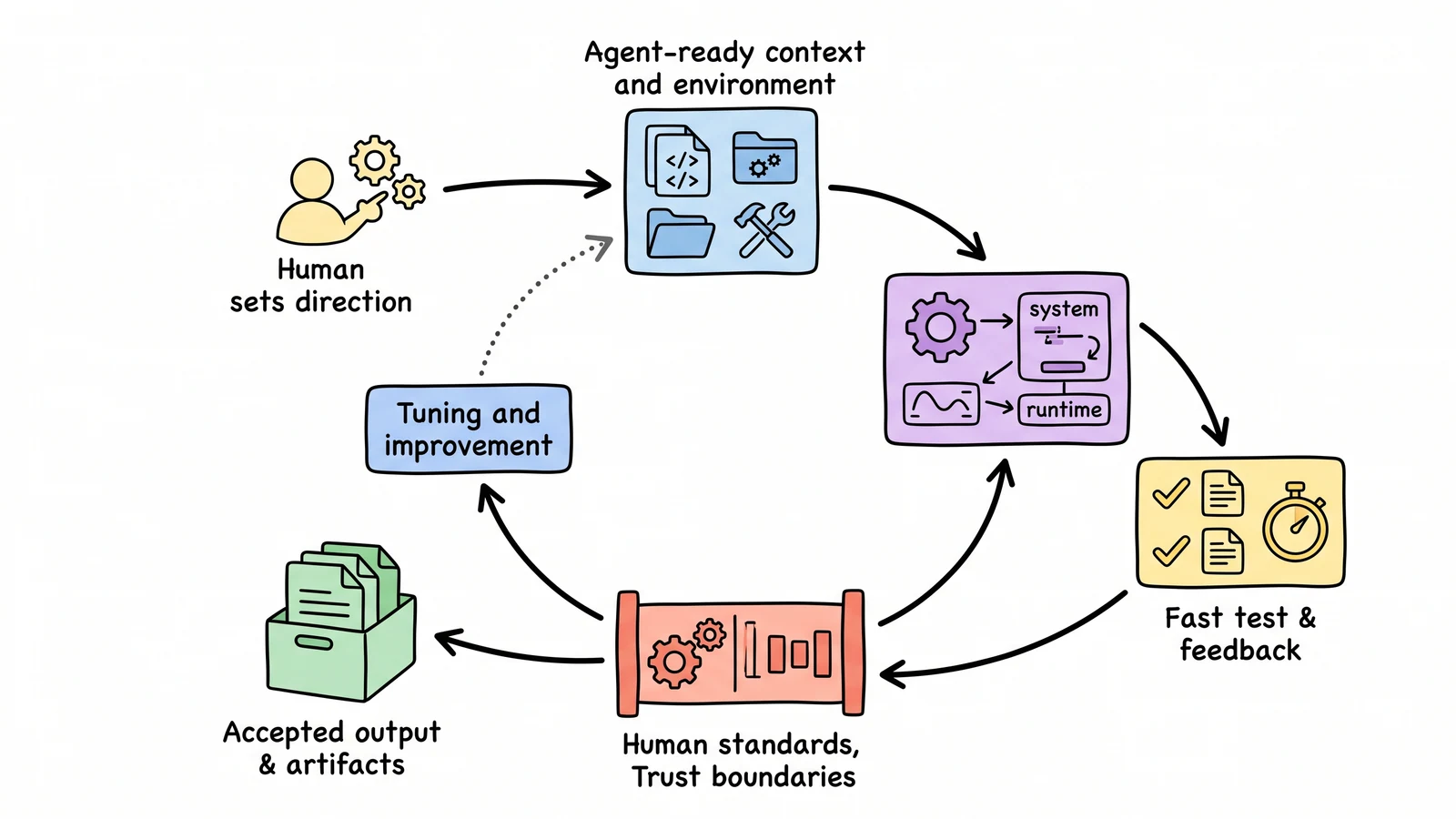
Frontier engineering shifts developer effort from writing every line directly toward designing the setup that lets agents produce acceptable software. This matters now because longer agent runs move the engineering bottleneck from code entry toward specifications, environment design, verification, and recovery.
Kiro says agents can write code, run tests, fix failures, and iterate for extended periods when the surrounding environment supports that work. The guide distinguishes teams that changed their operating method from teams that merely added a different coding tool. The mechanism is a feedback loop in which humans set direction and trust boundaries, agents execute inside prepared context, tests expose failures, and accepted results improve the next setup.
Teams should invest in machine-readable intent, fast tests, constrained permissions, observable execution, and explicit criteria for accepting generated changes. The evidence is an AWS and Kiro practitioner guide, not a controlled comparison proving a universal productivity gain for every codebase. Watch whether teams can reproduce the loop across different repositories while keeping defects, review load, and rollback cost visible.