Prompt Versioning Is Becoming Agent Operations

The Digibee and Opik case shows prompt management moving into the same traceable release loop as code, evals, and production incidents.

Retrieval answer

The Digibee and Opik case shows prompt management moving into the same traceable release loop as code, evals, and production incidents. The Digibee and Opik case is a small but important signal: prompts are no longer just text snippets inside an application. They are becoming operational artifacts with versions, run history, and rollback expectations. That changes the engineering model.

New Runtime synthesiseditorial-diagram
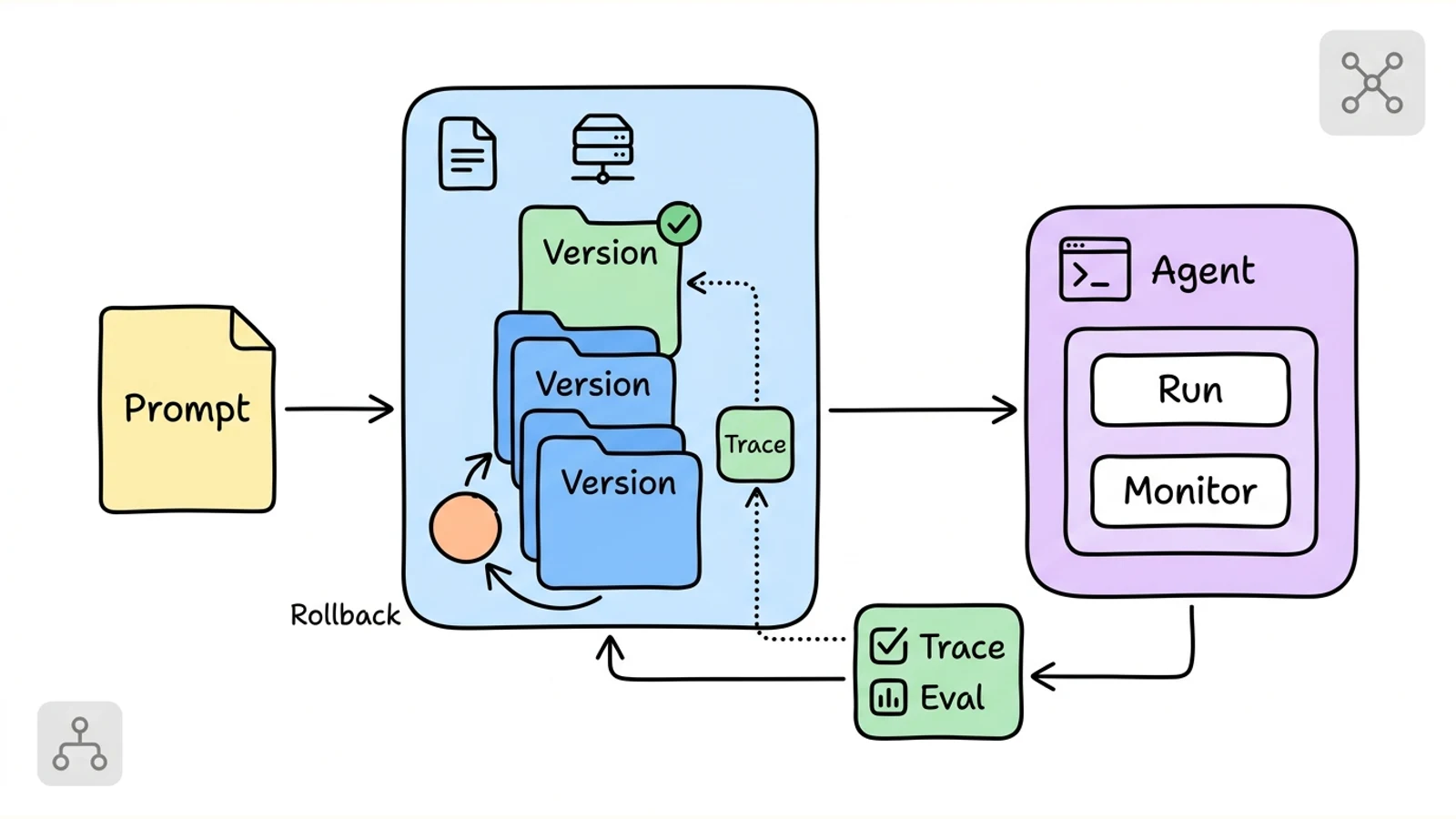
Whiteboard diagram showing prompt changes versioned, traced in production, evaluated, and rolled back when needed.
New Runtime synthesis: prompt changes need release semantics because they change agent behavior as directly as code.New Runtime synthesisOriginal source ↗

The Digibee and Opik case is a small but important signal: prompts are no longer just text snippets inside an application. They are becoming operational artifacts with versions, run history, and rollback expectations.

That changes the engineering model. If an agent’s behavior shifts because a prompt changed, the operator needs the same basic questions answered that they would ask about code: which version ran, what traces used it, what changed, whether it improved results, and how to restore the previous state.

The article is useful because it ties prompt management to observability rather than treating it as a standalone library feature. Versioned prompts only matter if they are connected to actual runs. Otherwise teams get a neat catalog but still cannot explain why behavior changed in production.

For New Runtime, this belongs directly inside the newsroom loop. Draft prompts, formatter prompts, source-resolution prompts, and eval prompts should all be versioned with the outputs they produce. A bad public draft should be traceable back to the exact prompt and source evidence that shaped it.

New Runtime synthesis: prompt libraries become part of release engineering. The useful unit is not a beautiful prompt; it is a versioned prompt connected to traces, evals, and a rollback path.

Recommendation

The Digibee and Opik case shows prompt management moving into the same traceable release loop as code, evals, and production incidents.

Discovery graph / next reads

Continue through New Runtime

Open the graph
  1. 01topicAgent Observability - New RuntimeExplore the agent observability topic hub.
  2. 02topicAgent evals - New RuntimeExplore the evals topic hub.
  3. 03related materialOpik Turns Agent Traces Into a Debugging SurfaceShares agent observability and llmops.
  4. 04related materialGoogle Runs The Same Agent Metrics Before And After LaunchShares agent observability and evals.
  5. 05related materialA Software Factory Connects Agents Through Verified OutcomesShares evals.

These links are also published in this page’s JSON twin and as typed edges in DiscoveryGraph v1.

Who read this page?Machine requests, hidden until opened

Loading the privacy-safe route aggregate…

Open the JSON contract