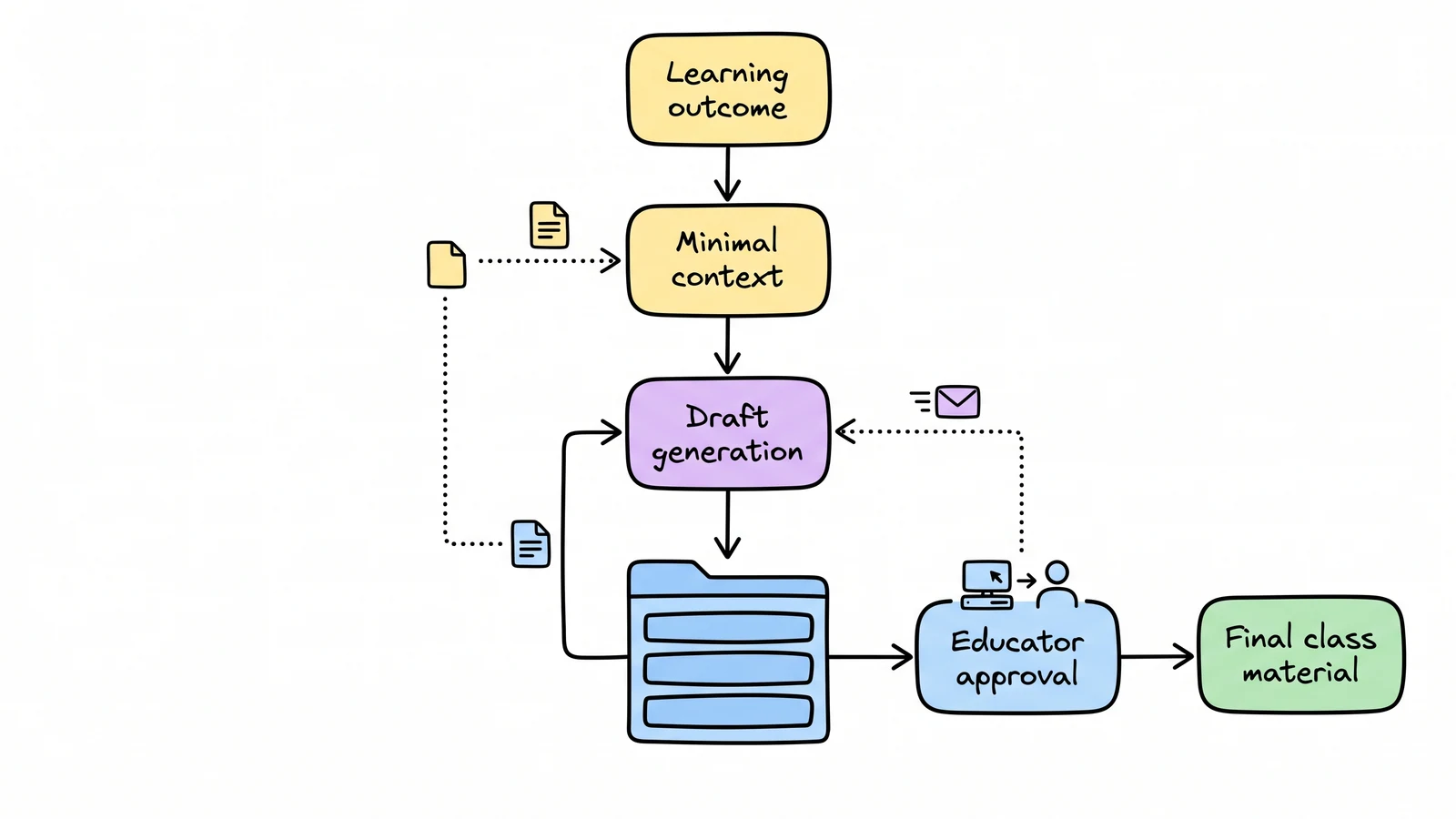
OpenAI's College Educator plugin is a useful example of vertical workflow design. It does not begin with an open chat. The educator chooses a concrete artifact such as a class plan, slide outline, activity, assignment, handout, or interactive site, then supplies the smallest source set needed to shape it.
The prompt contract names learning outcomes, course sources, constraints, and decisions requiring review. The output is a draft that must distinguish supplied material from generated suggestions, expose assumptions, and remain easy to revise before students see it. Connected apps are optional and should be limited to approved sources.
The boundaries are part of the product: minimize identifiable student data, keep answer keys separate, and do not delegate final grading, exceptions, teaching decisions, publication, or external actions. This pattern generalizes to other professional plugins: narrow context, reviewable artifacts, explicit approvals, and a list of judgments the agent cannot own.