Cohere Makes Speculative Decoding A Hardware-Aware Scheduling Decision

Cohere's Dynamic Speculative Decoding chooses speculation depth from hardware and load profiles because one fixed K can regress at high batch sizes.

Retrieval answer

The optimization is a scheduler decision informed by offline goodput profiles: dense and MoE models respond differently, and the optimal speculative depth changes with batch size and hardware contention.

New Runtime synthesiseditorial-diagram
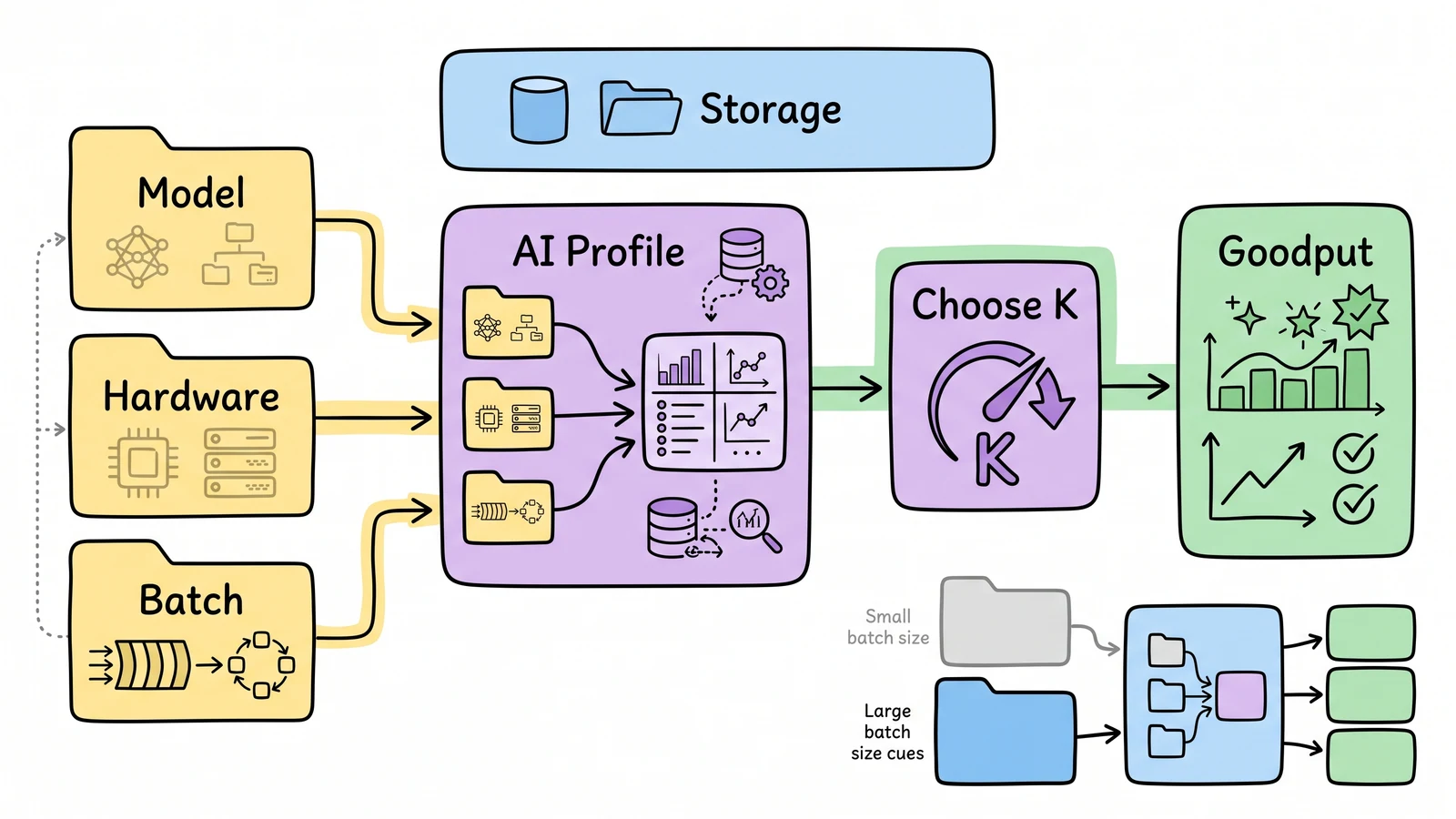
A New Runtime whiteboard diagram explaining cohere makes speculative decoding a hardware-aware scheduling decision.
New Runtime synthesis from Hardware-aware Dynamic Speculative Decoding.New Runtime synthesisOriginal source ->

Field note

Cohere published a hardware-aware Dynamic Speculative Decoding design for production inference. The premise is that a fixed speculation depth K is not reliably faster: the extra draft and verification work can reduce throughput when batch size or hardware contention changes.

The system builds offline profiles for acceptance length and inter-token-latency goodput, then looks up an appropriate K for the current model, hardware, and load. Dense models generally prefer a smaller K as batch size grows, while mixture-of-experts models can behave non-monotonically because expert loading changes the bottleneck.

On Command A, Cohere reports Dynamic Speculative Decoding about 23% faster than fixed-K at batch sizes 128 and 256. Against vanilla decoding, it reports 7.5% at batch 128 and 1.82% at batch 256, where fixed speculative decoding regressed. These are vendor benchmarks and depend on the tested hardware and workload.

The implementation integrates with vLLM's asynchronous scheduling and full CUDA graphs. The reusable idea is broader than this technique: inference optimizations should be selected by measured operating regime, not enabled as static model flags.

Recommendation

Cohere's Dynamic Speculative Decoding chooses speculation depth from hardware and load profiles because one fixed K can regress at high batch sizes.

Discovery graph / next reads

Continue through New Runtime

Open the graph
  1. 01topicInference - New RuntimeExplore the inference topic hub.
  2. 02topicSpeculative Decoding - New RuntimeExplore the speculative-decoding topic hub.
  3. 03topicHardware - New RuntimeExplore the hardware topic hub.
  4. 04archiveField NotesOpen the latest editorial analysis.
  5. 05source ledgerSource LedgerInspect the public source evidence graph.

These links are also published in this page's JSON twin and as typed edges in DiscoveryGraph v1.

Who read this page?Machine requests, hidden until opened

Loading the privacy-safe route aggregate...

Open the JSON contract