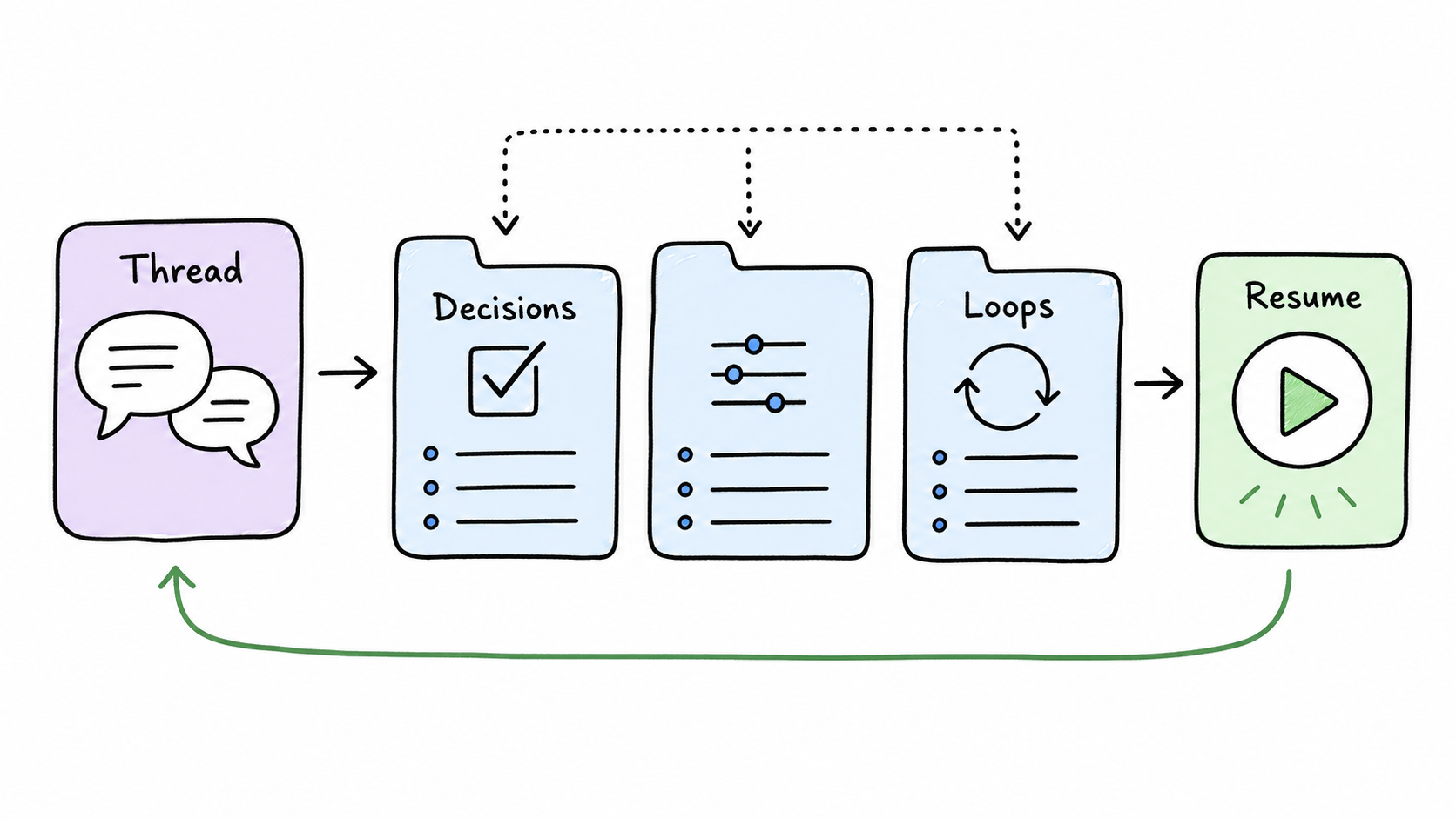
OpenAI’s Codex-maxxing guide is not a call to keep stuffing a larger prompt with more context. The useful split is simpler: code and work state should live in different reviewable places.
OpenAI published the guide on June 22, 2026, describing Codex as a persistent workspace for work that continues beyond a single prompt. The PDF makes the operating loop explicit: durable threads, voice and steering, memory, computer/browser surfaces, remote control, thread automation, concrete loops, verifiable goals, and the side panel as the artifact surface.
The Split
A repository should remain the source of truth for code. The memory vault should hold the context around the work: people and preferences, decisions already made, project state, open loops, daily notes, and the details that would otherwise disappear inside chat history.
That distinction matters because the vault is not hidden model memory. It is a normal set of files that can be opened, edited, reviewed, and diffed. The memory layer itself becomes part of the engineering review surface.
The Loop
The practical shape is:
thread -> connectors -> skills -> memory vault -> automation -> reviewA durable thread gives a workstream a home. Connectors define what it can inspect or touch. Skills package workflows that have already proven useful. The vault records state outside the conversation. Automation brings Codex back to the same thread on a cadence. Review gates decide whether the next prepared action is allowed to leave the workspace.
Automation Is A Heartbeat
The strongest part of the guide is the difference between a normal prompt and a heartbeat. A normal prompt says “do this now.” Thread automation says “return to this work, check whether state changed, and move only if there is a real next step.”
That can mean checking a PR, waiting for a preview deployment, reading new Slack or inbox replies, preparing a draft response, or gathering evidence. The important boundary is that sending messages, publishing, and irreversible actions still stay with the human.
Goals Need A Test
Long-running work becomes expensive if the goal is vague. The guide’s useful standard is a goal Codex can verify: expected behavior, review criteria, constraints, and a definition of done.
For New Runtime, that means “prepare a publishable item with primary sources, a sanitized handoff, OpenClaw receipt, and no public send” is a better objective than “process this batch.” The former has observable completion conditions. The latter can hide failures inside a long transcript.
New Runtime Read
This continues the “Codex as maintainer loop” pattern, but adds the missing layer: a separate operational journal that can be reviewed like code.
The newsroom version is already close to this architecture. Batch processing, source resolution, site materialization, OpenClaw handoff, receipts, and publication approval should not live only in a chat. They should leave durable state in files and the database, with each external action tied to a receipt and an idempotency key.
The shift is not “the agent remembers more.” The shift is “the state around the work becomes inspectable enough that the agent can resume without making the human trust an invisible memory.”