QM Turns Team Agents Into Scoped Runtime State

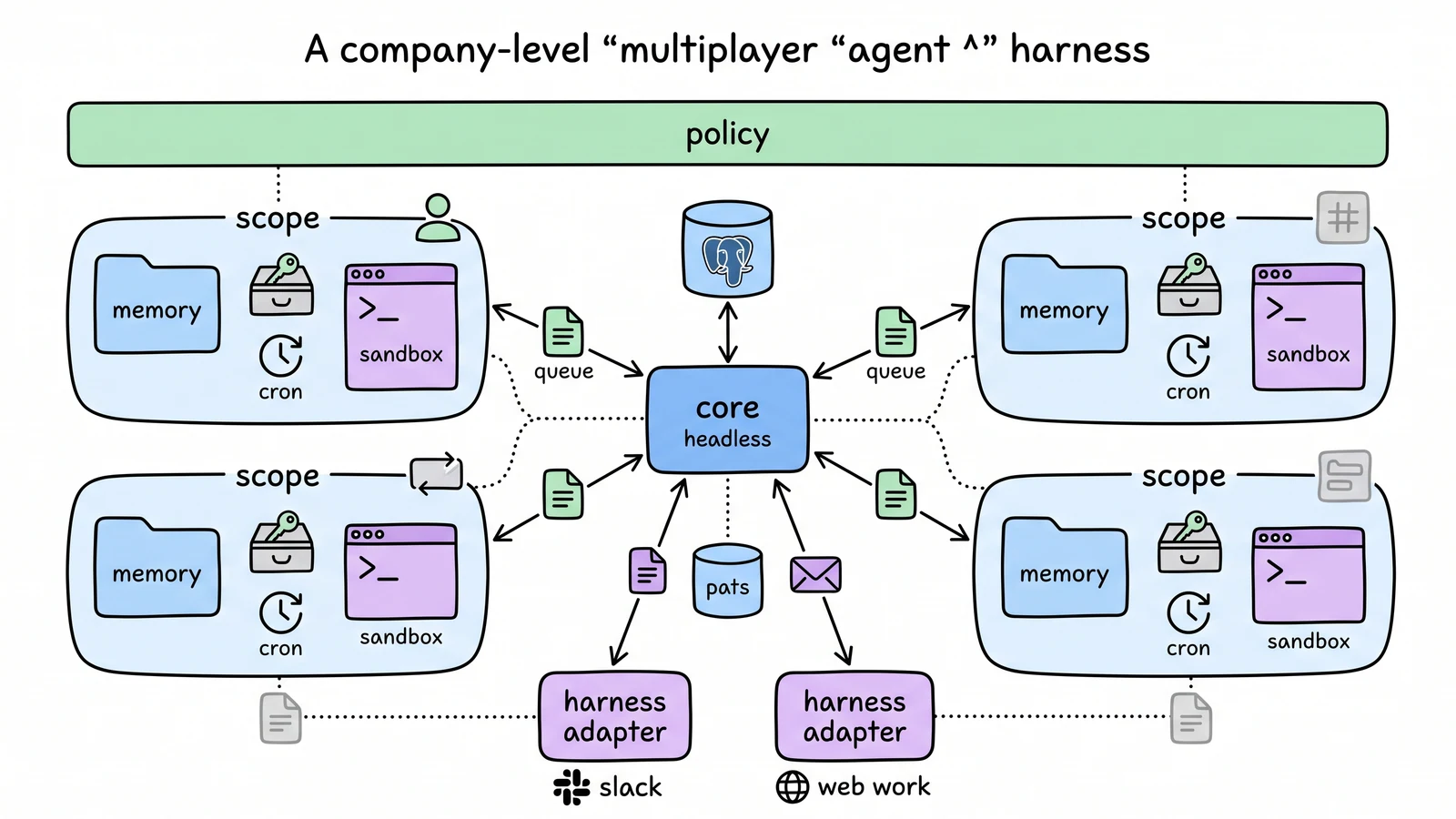
QM points at a multiplayer agent harness where identity, memory, permissions, credentials, crons, and sandboxes are scoped by person, channel, and project.

Retrieval answer

QM points at a multiplayer agent harness where identity, memory, permissions, credentials, crons, and sandboxes are scoped by person, channel, and project. QM is interesting because it frames the company agent as a runtime, not a bot in a group chat. The repository describes a multiplayer agent harness for Slack and web use, with scoped memory, files, keychain access, permissions, crons, web apps, and durable sandbox

New Runtime synthesiseditorial-diagram
Hand-drawn hub-and-spoke runtime map with a headless core, storage, scoped workspaces, memory, keychains, permission gates, crons, sandboxes, and adapters.
New Runtime synthesis: multiplayer agents need scoped runtime state, not just a shared transcript.New Runtime synthesis from public source materialOriginal source ->
  1. ScopeEach person, channel, or project needs its own memory and permission context.
  2. CoreThe harness coordinates state, credentials, queues, and durable execution.
  3. SandboxWork runs in recoverable environments instead of disappearing into chat history.

Field note

QM is interesting because it frames the company agent as a runtime, not a bot in a group chat. The repository describes a multiplayer agent harness for Slack and web use, with scoped memory, files, keychain access, permissions, crons, web apps, and durable sandboxes.

That is the right shape for organizational work. A team agent cannot treat every user, channel, project, credential, and long-running task as one flat transcript. The operating unit has to be scoped.

This is close to the OpenClaw and Hermes boundary. One system can stay heavy and approval-gated; another can run the fast operational lane. What matters is that identity, memory, permissions, and receipts are explicit before the agent starts acting.

For New Runtime, QM is a useful reference point for the next layer: agent work should become multiplayer only after the runtime can say who asked, what scope was active, which tools were allowed, and where the durable state lives.

Recommendation

QM points at a multiplayer agent harness where identity, memory, permissions, credentials, crons, and sandboxes are scoped by person, channel, and project.

Discovery graph / next reads

Continue through New Runtime

Open the graph
  1. 01topicCoding Agents - New RuntimeExplore the coding-agents topic hub.
  2. 02topicOperations - New RuntimeExplore the operations topic hub.
  3. 03topicDeveloper Tools - New RuntimeExplore the developer-tools topic hub.
  4. 04archiveField NotesOpen the latest editorial analysis.
  5. 05source ledgerSource LedgerInspect the public source evidence graph.

These links are also published in this page's JSON twin and as typed edges in DiscoveryGraph v1.

Who read this page?Machine requests, hidden until opened

Loading the privacy-safe route aggregate...

Open the JSON contract