OpenAI And Apple Turn Agent Hardware Recruiting Into A Trade-Secrets Test

Apple sued OpenAI, io Products, and former employees over alleged hardware trade-secret misuse; OpenAI publicly disputed the allegations and published correspondence.

Retrieval answer

This is an unresolved dispute, not a finding of theft. It matters operationally because AI hardware teams must distinguish employee know-how from protected artifacts and preserve evidence across recruiting, access revocation, and design review.

New Runtime synthesiseditorial-diagram
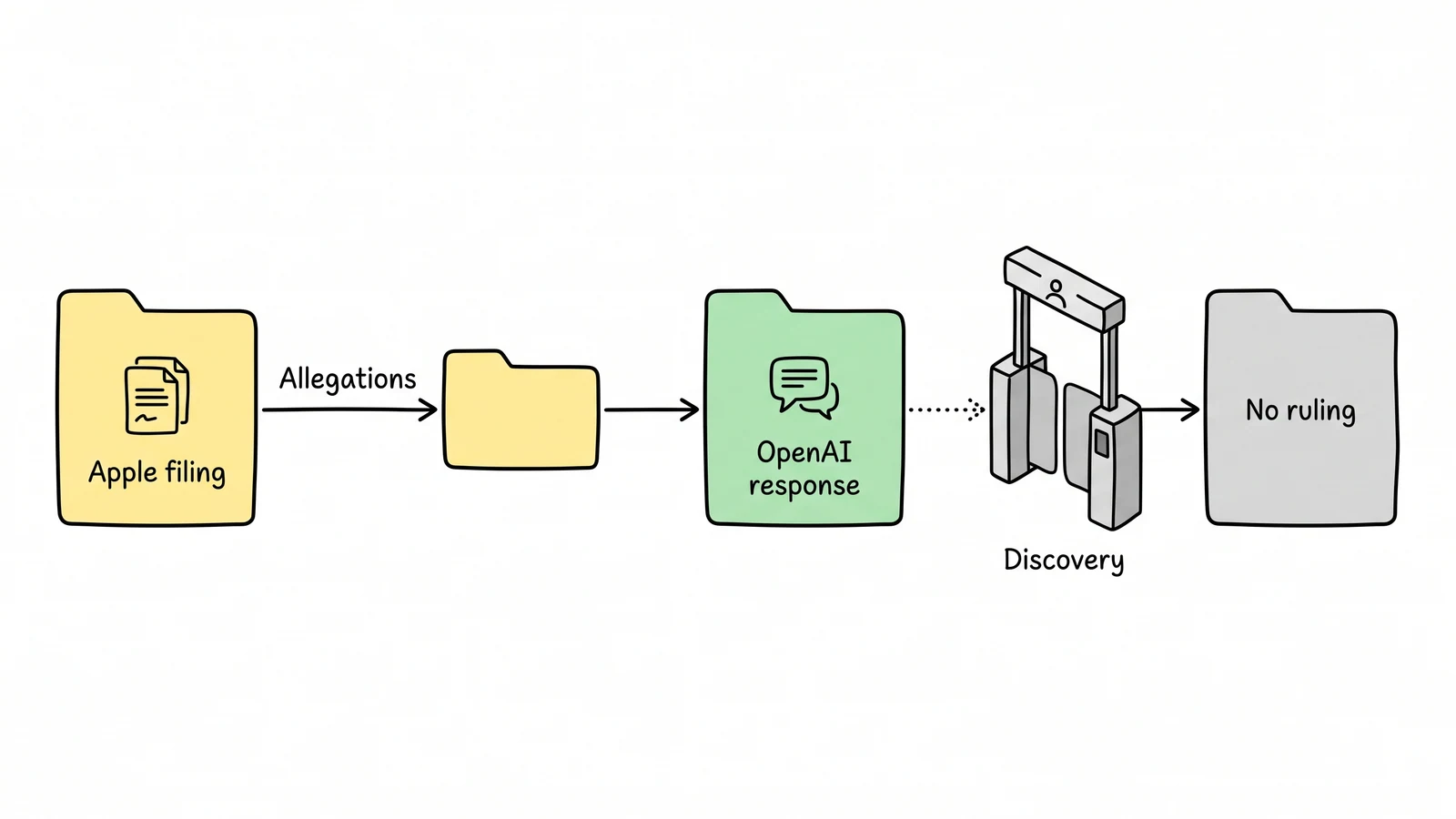
A New Runtime whiteboard diagram explaining openai and apple turn agent hardware recruiting into a trade-secrets test.
New Runtime synthesis from Apple Inc. v. Liu et al. and OpenAI response.New Runtime synthesisOriginal source ->

Field note

Apple filed a federal trade-secrets case against OpenAI, io Products, Chang Liu, and Tang Tan on July 10. Apple alleges that former employees brought confidential hardware information into OpenAI's device effort and is seeking a preliminary injunction and expedited discovery. These are allegations; the court has not ruled on them.

OpenAI responded publicly on August 3, disputing Apple's factual account, saying Apple confused identities in parts of its outreach, and stating that it does not want Apple's trade secrets. OpenAI also published communications around the dispute. The competing narratives are now part of the evidence fight, not a settled history.

The broader engineering question is concrete. Hardware and agent-device programs recruit people precisely for accumulated expertise, while employment agreements protect particular documents, prototypes, designs, and non-public processes. A defensible organization needs clean-room boundaries, provenance for imported design decisions, prompt access revocation, and written review when a new hire proposes something close to a former employer's system.

The news is the escalation into litigation and OpenAI's unusually public rebuttal. The durable lesson is that talent mobility becomes an evidence-management problem when teams are building new physical interfaces for AI.

Recommendation

Apple sued OpenAI, io Products, and former employees over alleged hardware trade-secret misuse; OpenAI publicly disputed the allegations and published correspondence.

Discovery graph / next reads

Continue through New Runtime

Open the graph
  1. 01topicAi Hardware - New RuntimeExplore the ai-hardware topic hub.
  2. 02topicTrade Secrets - New RuntimeExplore the trade-secrets topic hub.
  3. 03topicLegal - New RuntimeExplore the legal topic hub.
  4. 04archiveField NotesOpen the latest editorial analysis.
  5. 05source ledgerSource LedgerInspect the public source evidence graph.

These links are also published in this page's JSON twin and as typed edges in DiscoveryGraph v1.

Who read this page?Machine requests, hidden until opened

Loading the privacy-safe route aggregate...

Open the JSON contract