Mistral Studio’s prompt and skill release addresses an uncomfortable production question: which exact instruction version generated this behavior?
Prompts often begin in notebooks, chat threads, or code constants. Skills are copied between teams because no one can see the authoritative version. Git records code changes, but business owners who understand policy and wording still depend on engineers for each iteration. The result is visible drift with unclear ownership.
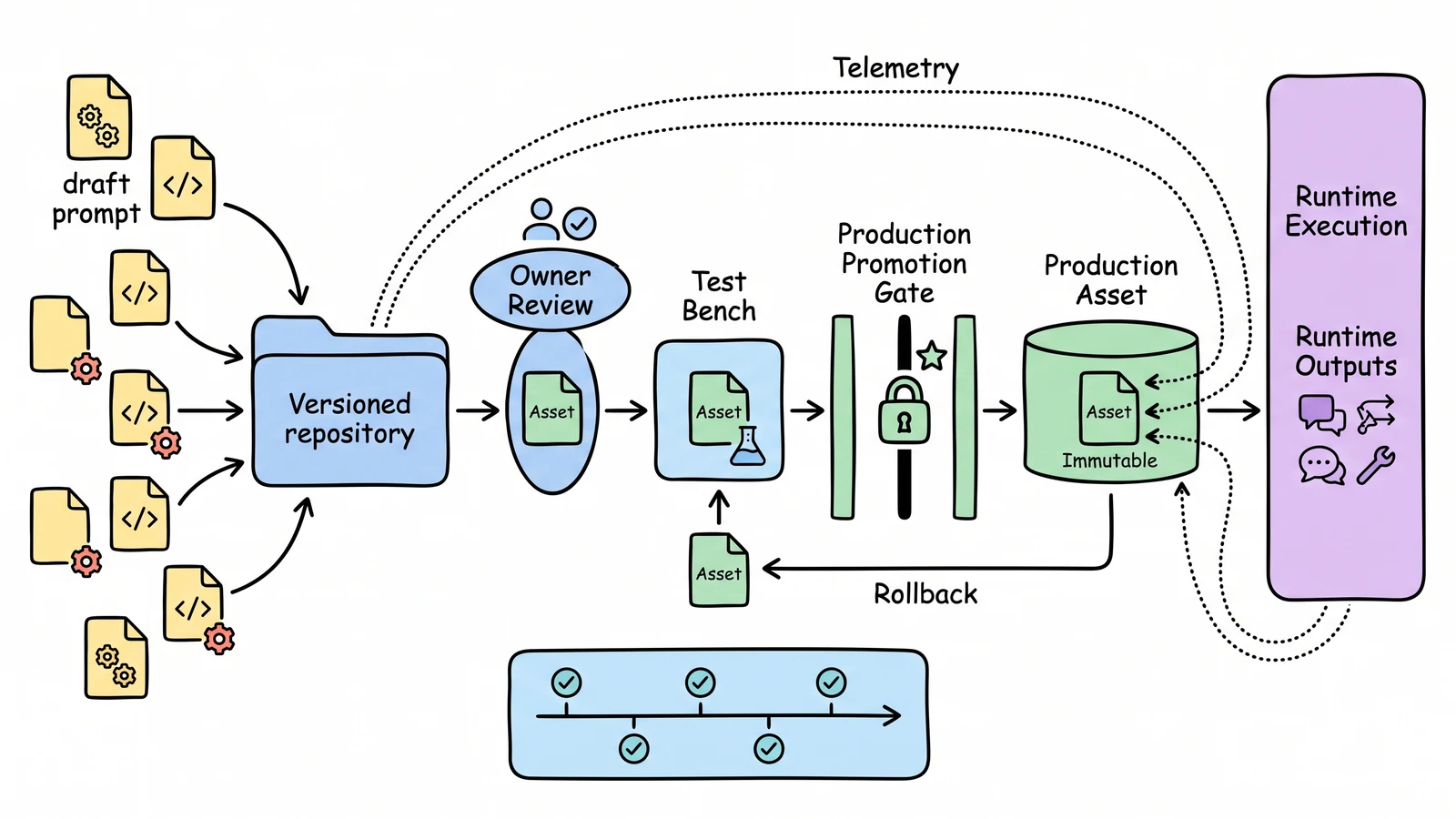
Studio turns both asset types into records with immutable versions, named owners, lineage, labels, rollback, and audit logs. A deployed version cannot be edited silently. A team can compare revisions, restore a known-good asset, and answer who changed what and when.
The workflow deliberately separates iteration from promotion. A domain expert can edit and test an instruction without waiting for a full code deployment. Moving an asset to a production label can still invoke the organization’s CI/CD and approval controls. Speed belongs in the drafting loop; authority belongs at the promotion boundary.
Because the assets live alongside runtime observability, a production output can be traced back to the prompt or skill version behind it. Mistral also exposes governed skills as MCP servers, reducing the chance that the production runtime calls a copied artifact that has drifted from the source of record.
This is the missing operational layer in many skill repositories. Files remain useful distribution units, but production needs identity, ownership, promotion state, usage evidence, and rollback around them. Without that record, a larger skill library only creates more invisible configuration.