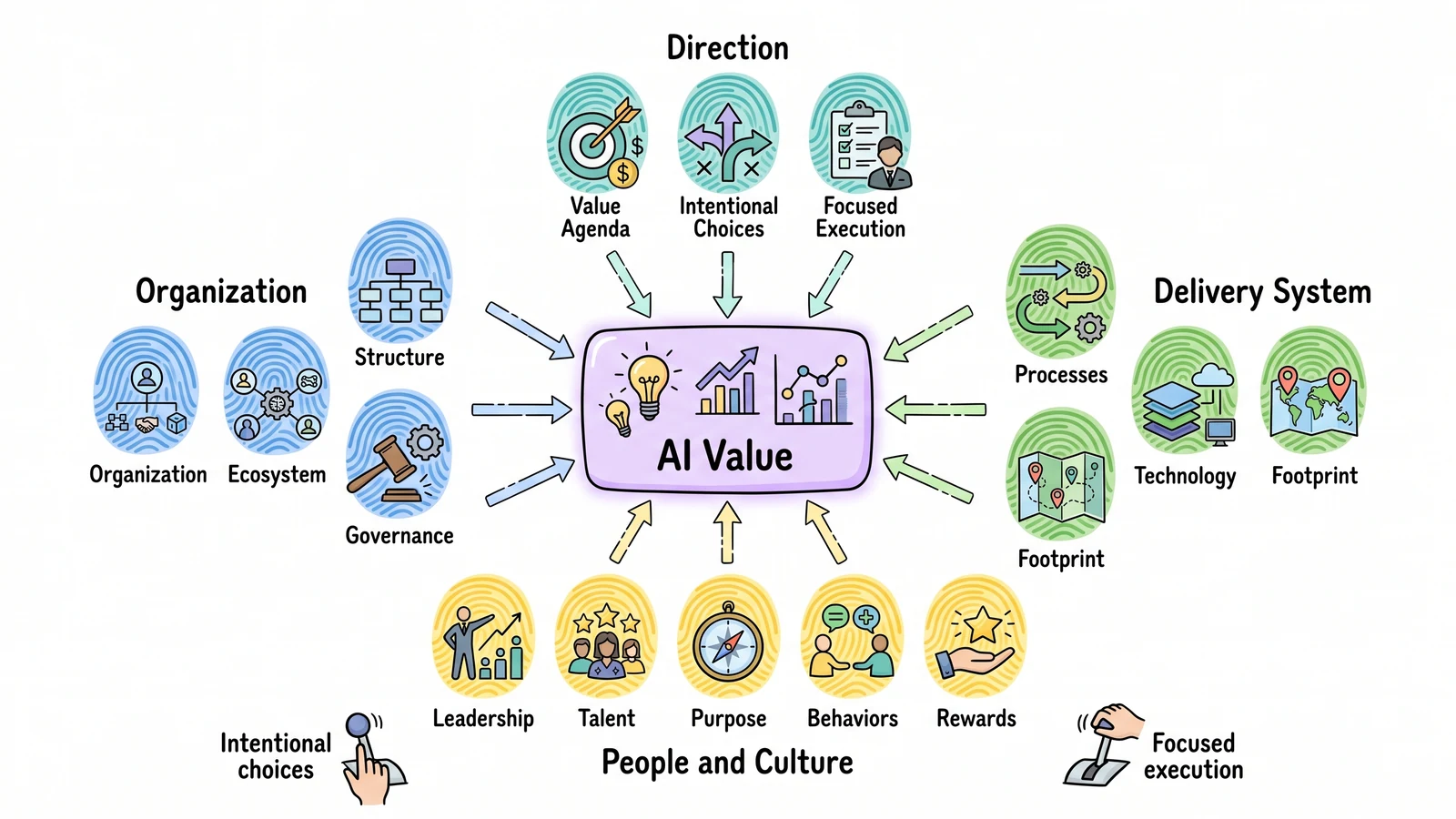
AI value depends on an intentionally designed operating-model configuration, not on copying one fashionable organizational chart. This matters now because many organizations have deployed tools faster than they have redesigned ownership, incentives, and the work through which value is realized.
McKinsey organizes the operating model around twelve elements spanning value agenda, structure, ecosystem, governance, processes, technology, leadership, talent, footprint, purpose, behaviors, and rewards. The article argues that organizations create distinct operating-model fingerprints from the combinations they choose and execute. The mechanism is mutual alignment: decision rights, workflow, technology, incentives, talent, and governance reinforce or constrain one another as AI work moves across the enterprise.
Leaders should diagnose the few operating-model choices that block a priority workflow instead of launching another isolated technology program. The evidence is McKinsey's framework and survey-based interpretation; it does not prove that one configuration causes superior performance in every context. Watch whether organizations publish longitudinal evidence connecting specific operating-model changes with sustained workflow outcomes.