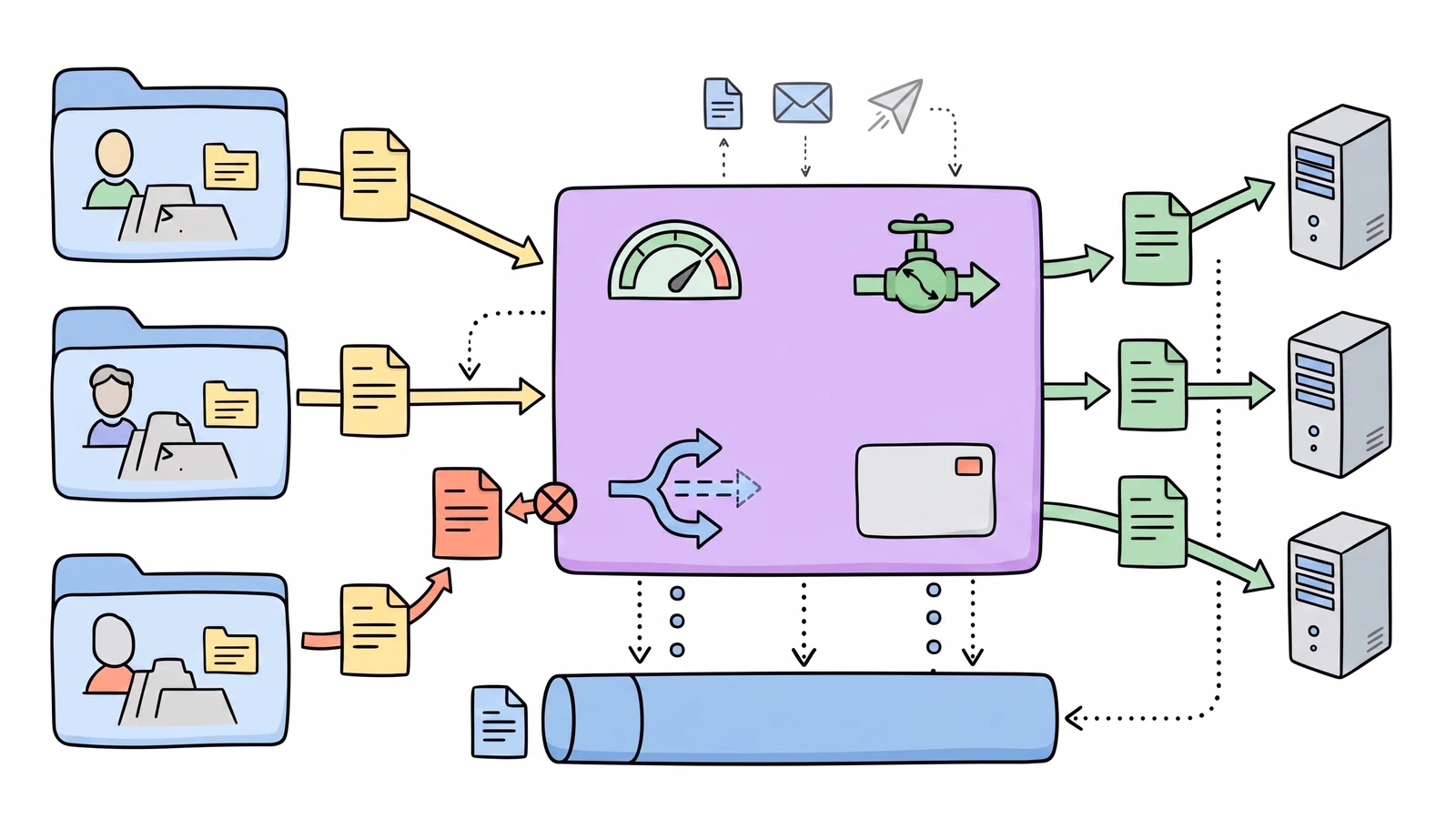
LangChain made LangSmith LLM Gateway available in public beta. The release is not another model endpoint. It is a governance layer between production agents and the models they call.
The immediate controls are the ones that usually become painful only after an agent is already live: spend caps, rate limits, model fallbacks, and sensitive data handling. LangSmith can set limits at organization, workspace, API key, and user levels. In multi-tenant systems, a custom request header can separate customer policies without issuing a new provider key per customer.
The hard boundary matters. When a spend cap is hit, the agent gets a clear 402 response. When a provider is down or rate-limited, fallback rules can route to another model or host. When data protection is enabled, PII and secrets are redacted before the request reaches the model provider and before sensitive content lands in traces.
LangSmith is keeping the gateway BYOK-first. Teams can bring provider keys for OpenAI, Anthropic, Fireworks, or compatible endpoints, while LangSmith also supports hosted open-model inference through Fireworks and Gateway Credits. The getting-started path is deliberately small: point the agent at the LangSmith Gateway endpoint, authenticate with a LangSmith API key, add provider keys to workspace secrets, configure limits and fallbacks, then update base_url.
New Runtime Read
Agent production is moving from prompt-and-model selection to policy-controlled model traffic. The interesting unit is no longer “which model did this agent use?” It is “which runtime contract governed the model call before it spent money, leaked data, or failed a customer workflow?”
This is the same direction as broader gateway work across the stack: model calls become routable infrastructure with budgets, fallbacks, audit trails, and data boundaries. The gateway is where agent autonomy becomes operationally accountable.