Cloudflare’s pvcli release is a small tool with a useful product lesson: privacy infrastructure needs debuggable interfaces or it stays reserved for teams with deep protocol specialists.
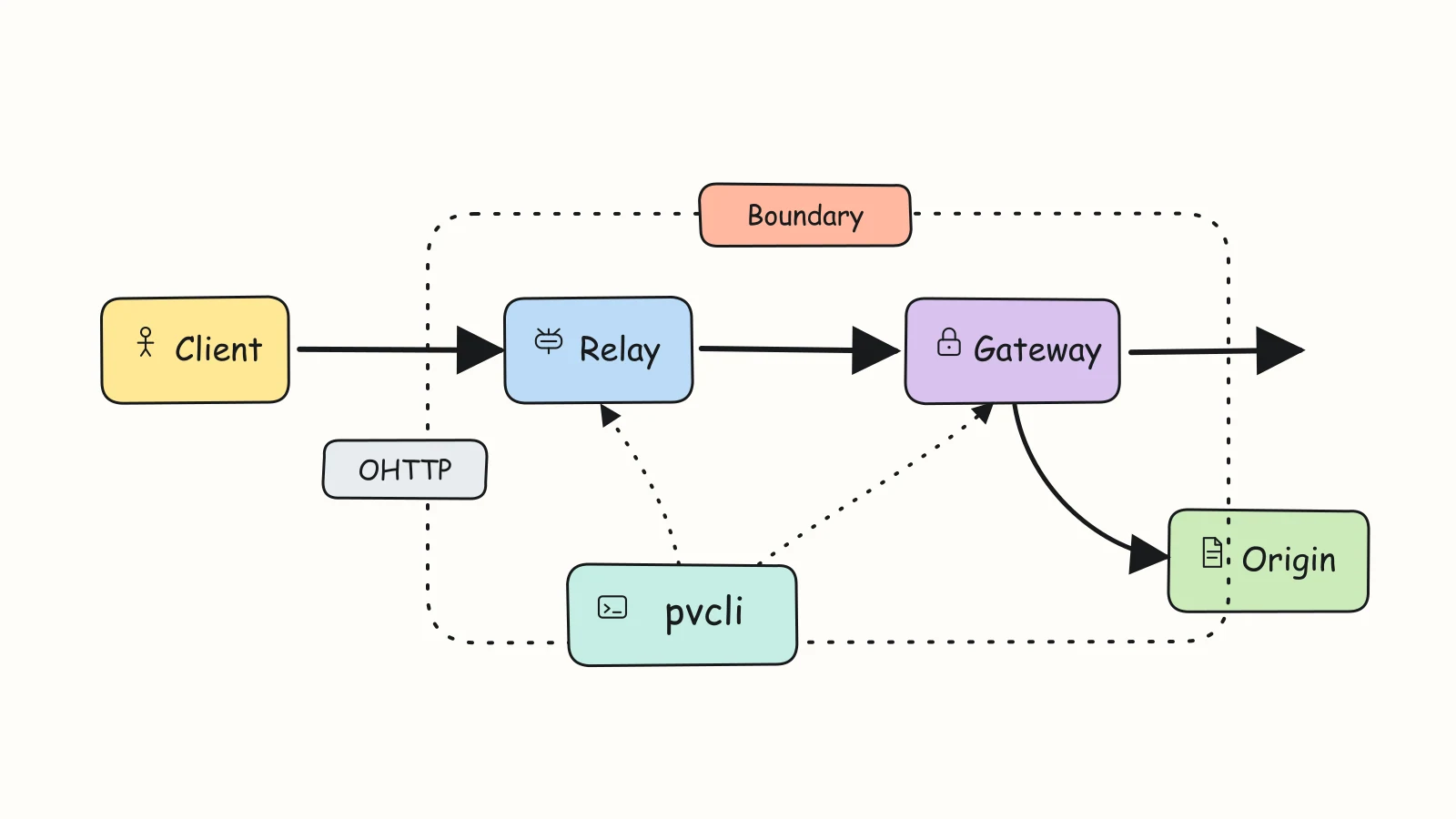
The problem is structural. Oblivious HTTP splits trust across parties so no one operator sees both who made a request and what destination it reaches. That is the privacy property. It is also why debugging is painful.
Cloudflare says pvcli wraps its experience operating OHTTP-scale systems into an open-source CLI. It can run a full OHTTP request across relay, gateway, and origin with one command, pass headers to the relay, use mTLS, and expose the steps that otherwise become custom scripts and manual binary parsing.
Why it matters
This is agent-ready software in a concrete sense. A curl-like command surface gives both humans and agents something stable to call, inspect, and retry.
The release also points beyond OHTTP. Cloudflare says the tool is meant to grow toward MASQUE and Privacy Pass. If privacy-preserving infrastructure becomes common in AI products, the operational bottleneck will be testing and incident response, not only protocol design.
New Runtime Read
Privacy-preserving AI workflows will need tools like this. If an agent handles sensitive personal data, the system may split inference, identity, logs, and content across different trust boundaries.
That only works in production if operators can debug the boundary without destroying it. pvcli is a sign that privacy protocols are becoming ordinary infrastructure: commandable, testable, logged, and eventually usable by agents.